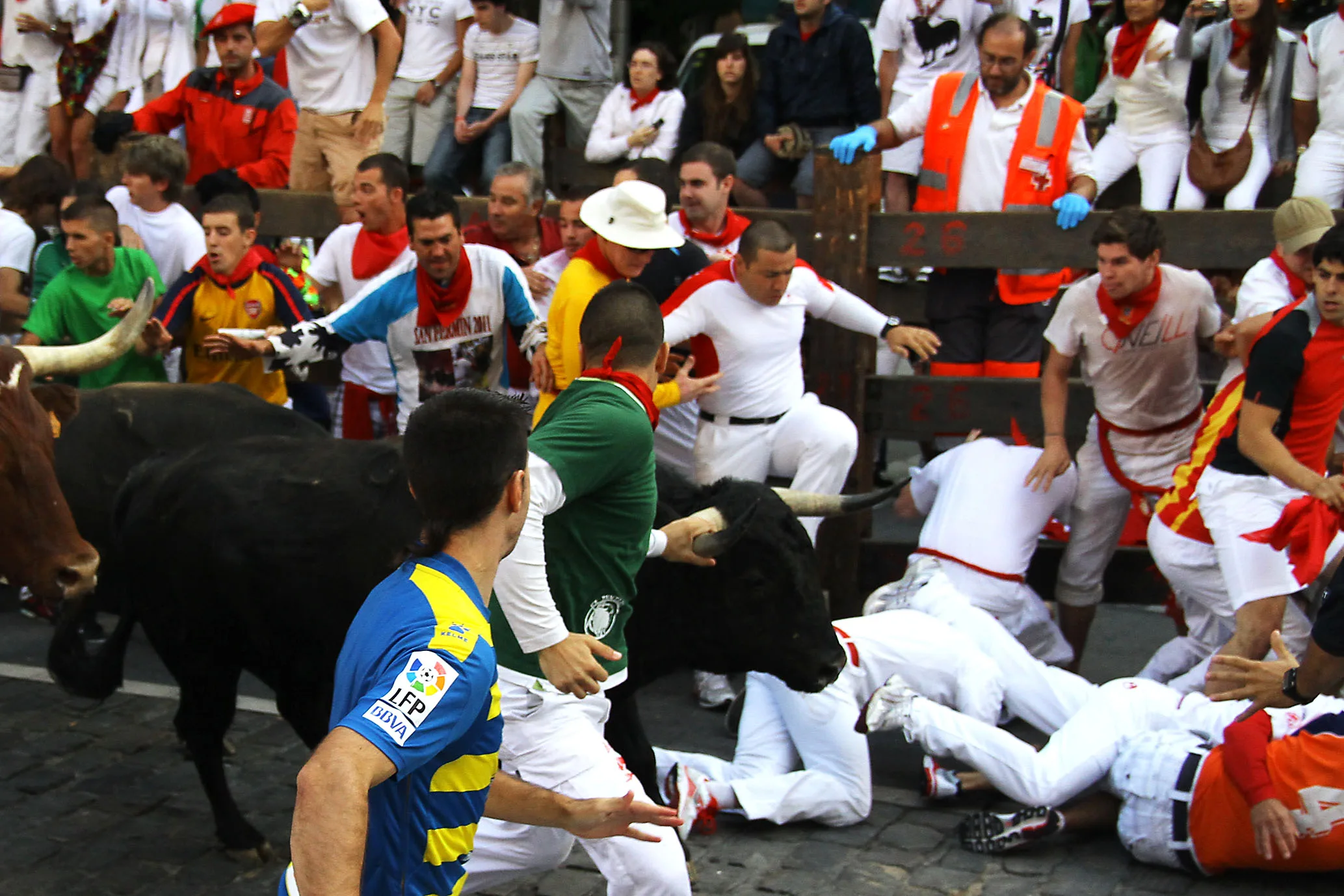
Yes, the Running of the Bulls is genuinely dangerous — but probably not in the way you imagine. Deaths are rare: around 15 people have died in Pamplona's bull runs since records began in 1910, the last of them in 2009. Injuries, on the other hand, are part of every San Fermín: between 50 and 100 people are hurt each year, most of them by falls and collisions rather than horns.
What causes most injuries
- Falls and collisions. Hundreds of people run in a few narrow streets. Tripping over another runner, or being knocked down, causes most of the bruises, cuts and fractures each year.
- Pile-ups. When several runners fall in a narrow spot, others fall on top of them. The entrance to the bullring is the classic place for this.
- Gorings. The most serious injuries, but a minority of the total. They usually happen when a bull gets separated from the herd or when a runner falls right in front of the animals.
- Being trampled by the herd as it passes over someone on the ground.
The riskiest moments
A lone bull. Bulls feel safe in the herd. A bull that slips at the Estafeta corner and loses the group becomes disoriented and may turn back towards the runners — this is when most gorings happen. The long gap between the first and second rockets warns that something is wrong.
The entrance to the bullring. The narrow passage into the ring can become blocked if runners fall, creating a pile-up just as the bulls arrive.
Crowded mornings. Weekend runs draw far more runners, and many of them are inexperienced. More people means more falls.
Why the risk is lower than it looks
The run is short and very organised. There are double fences along much of the route, medical teams positioned along the course and an ambulance service on standby, and specialists — known as “pastores” — guide the herd with long sticks. Experienced local runners also help keep things moving.
How to reduce the risk
- Do not run if you have been drinking or have not slept.
- Watch at least one run before you take part.
- Choose a weekday and a wide stretch of the course.
- If you fall, stay down and protect your head until the herd has passed.
- If you see a bull on its own, get out of its way — never try to get close.
And for spectators the answer is simple: watching from the bullring, a balcony or behind the outer fence is safe.
A note on the figures
Different sources count deaths slightly differently, so you will see 15 or 16 quoted. Injury figures vary a lot from year to year depending on the bulls, the weather and the crowds.
Related guides
If you still want to run, read the official rules and our tips for first-timers. If you would rather watch, here is where to watch the Running of the Bulls.
In pictures
Running of the Bulls pictures: 27 photos, plus all our San Fermín pictures.