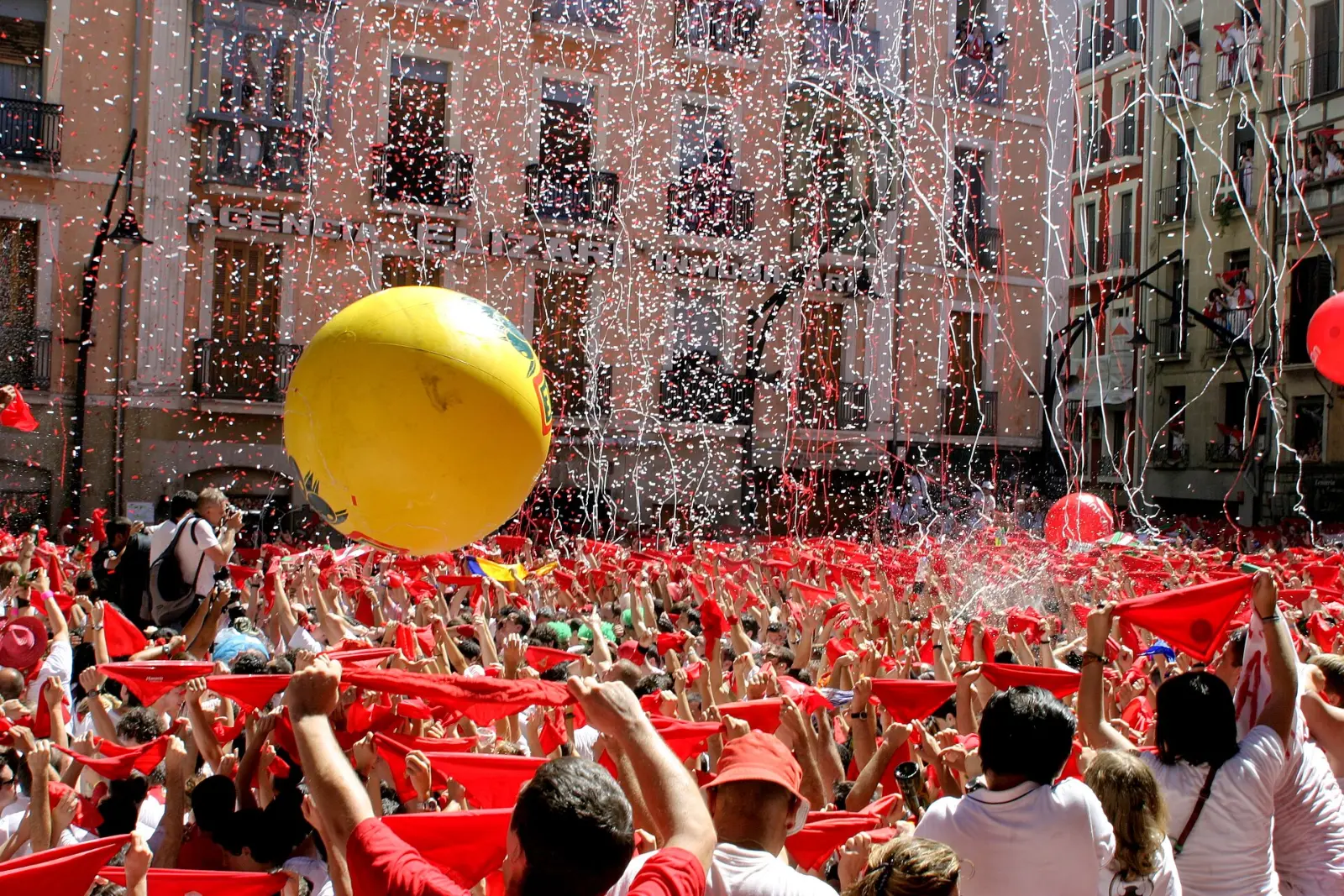
For nine days in July, Pamplona dresses in two colours. Nobody checks what you wear and no bar has a dress code, but white clothes with a red neckerchief and a red sash are, in practice, the uniform of San Fermín. So if you are wondering what clothes to wear to San Fermín, the short answer is: the same white and red outfit as everyone else. This guide explains each piece, where it comes from, how to put it on, and where to buy it in Pamplona.
The San Fermín outfit at a glance
- White shirt or T-shirt. Any plain white top works.
- White trousers. Light and loose. White shorts and skirts are common too.
- Red neckerchief (pañuelo, or pañuelico in Pamplona). The essential piece: on at the Chupinazo, off at the Pobre de mí.
- Red sash (faja). A long red band wound around the waist.
- Comfortable closed shoes. Trainers for most people; white espadrilles with red laces if you want the traditional look.
What the colours mean
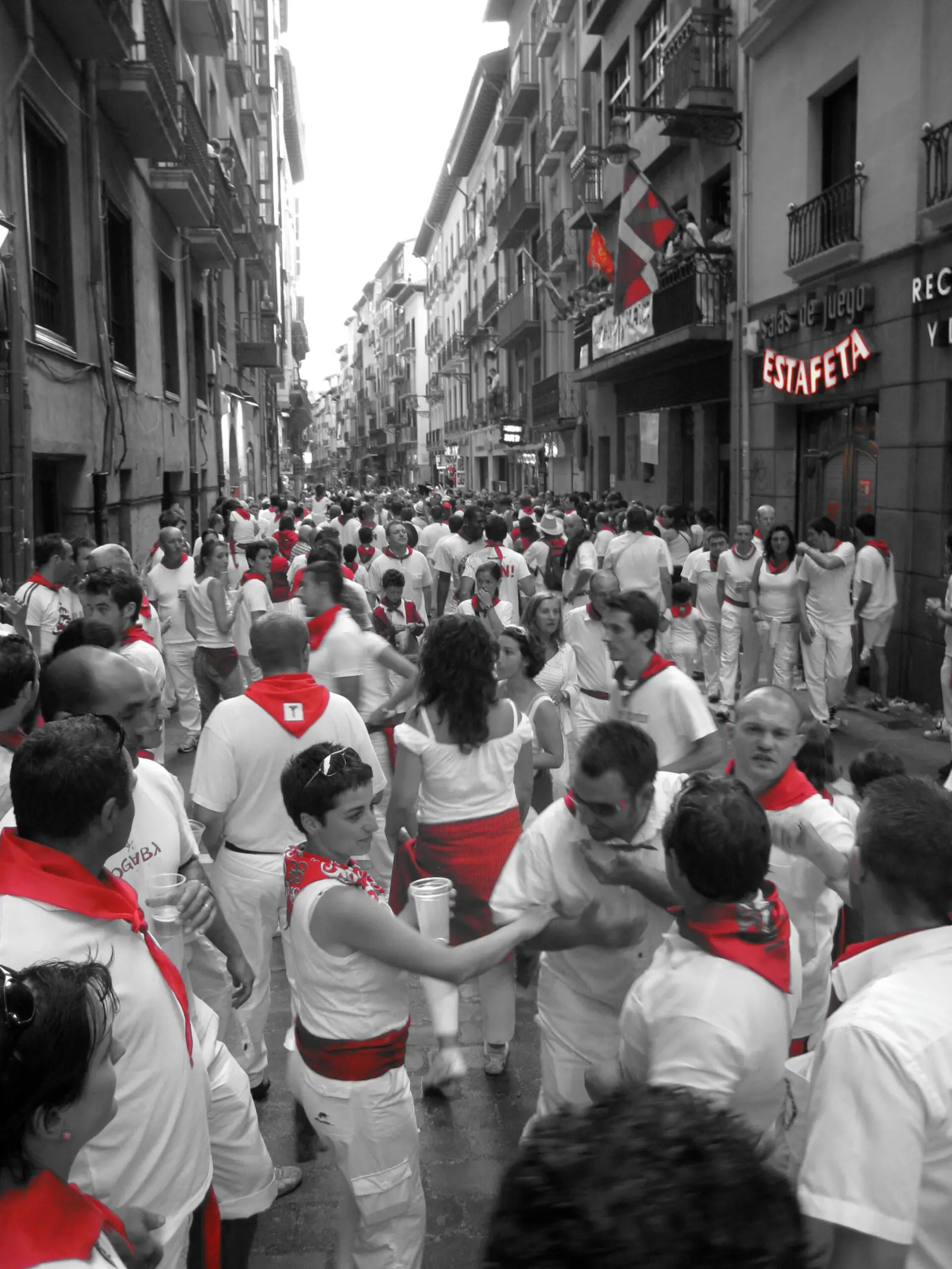
Red is the colour of the saint. According to tradition, San Fermín, the first bishop of Pamplona, died a martyr, beheaded in Amiens, and the red recalls his blood. It also matches the red of Navarre's flag. White is the plain background that makes the red stand out, and a sensible choice for a festival held in the middle of July.

Where the white and red comes from
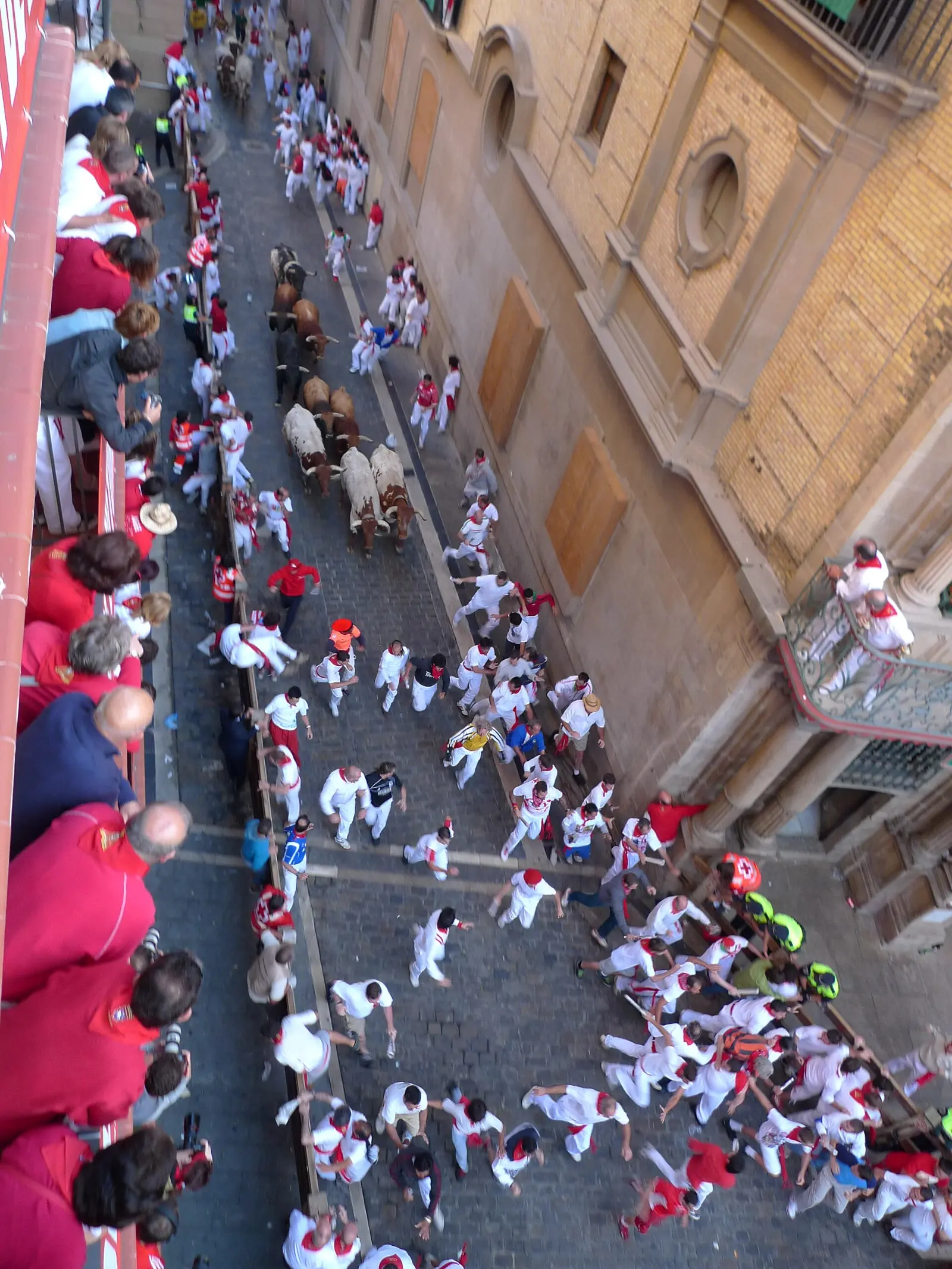
For a long time people went to the festival in their ordinary clothes, and Pamplona City Council itself says the exact origin of the outfit is unknown. The usual explanation points to the now defunct Peña La Veleta, a group that in the early 1930s dressed in white with red details to stand out from the other peñas, an outfit cheap enough for anyone. The white costumes of txistularis (traditional musicians), folk dancers and pelota players may have played a part too.
The look spread over the following decades until it became the image of the festival around the world. Today almost everyone wears it, locals and visitors alike, although some peñas keep their own colours.
The key pieces
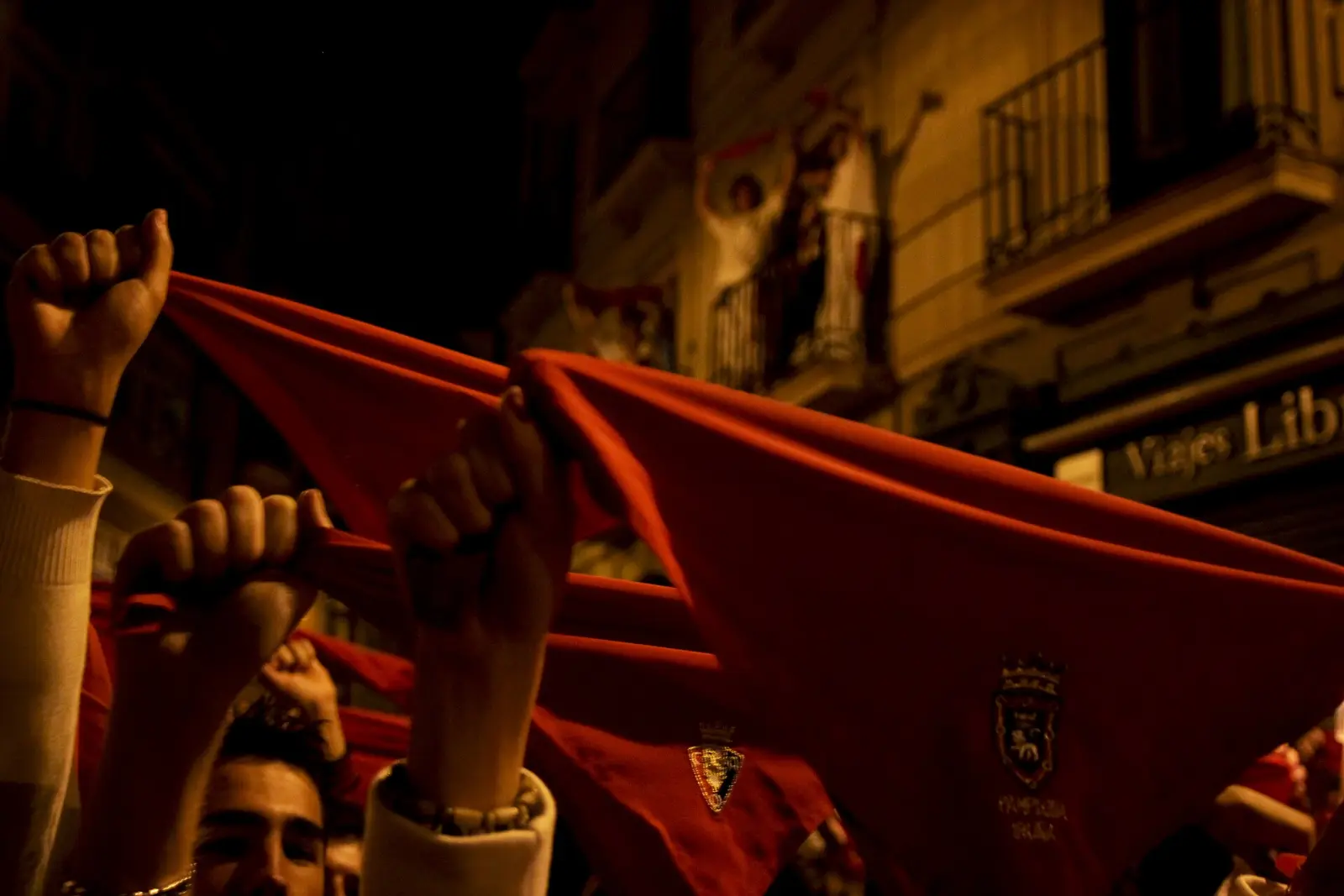
The neckerchief. A square of red cloth, often printed or embroidered with Pamplona's coat of arms, the image of San Fermín or the name of a peña. Many people wear the same one year after year, and some collect commemorative ones. It is the piece that really matters: wearing it means you are part of the fiesta.
The sash. A red band about 2.5 metres long and 12 centimetres wide, wound several times around the waist with its fringed ends hanging at the side. It started as working clothing that protected farmhands' lower backs; today it is decorative.
White shirt and trousers. No brand or style is required. Choose breathable cotton or linen and avoid thin, see-through whites: it is hot, you will sweat, and your clothes will almost certainly end up splashed with wine or sangria at some point.
Shoes. You will walk and stand for hours on cobbled streets that are often sticky with spilt drinks. Closed, comfortable shoes are best. White espadrilles with red laces are the traditional option, but they suit a photo better than a long night.

How to tie the sash
- If the sash is wide, fold it lengthwise so it sits flat.
- Hold one end against your hip, leaving about 30 centimetres hanging.
- Wrap it tightly around your waist two or three times, each turn on top of the last.
- Tuck the rest under the turns, or tie it to the hanging end with a simple knot.
- Leave the fringed ends hanging over one hip.
It is much easier with a friend holding one end while you turn into it.
When to put on the neckerchief and when to take it off
The neckerchief is not worn before the festival begins. On July 6, people hold it in their hand or tie it around the wrist, and raise it in the air while they wait in the Town Hall square. When the Chupinazo goes off at 12 noon, everyone ties it around their neck at once. It stays on for nine days.
To tie it, fold it into a triangle, roll it loosely into a band and knot it at the front of the neck.
It comes off at the Pobre de mí, the farewell at midnight on July 14, when the crowd sings with candles in hand and unties their neckerchiefs. Putting it on before the Chupinazo is the classic beginner's mistake.

Where to buy the outfit in Pamplona and how much it costs
You do not need to bring anything from home. Before and during the festival, the outfit is sold all over Pamplona: street stalls and souvenir shops in the Old Town, clothing shops, department stores and even supermarkets.
- Neckerchief or sash on its own: a few euros each; embroidered ones cost more.
- Complete kit (shirt, trousers, neckerchief and sash): roughly 25–45 €, depending on quality.
If you can, buy it before the morning of July 6: the Old Town fills up fast and you will want to be in place early for the Chupinazo. And if you prefer to arrive ready, any plain white clothes from home are perfectly fine. More tips in our guide to planning your trip.
What to wear if you run with the bulls
Runners wear the same white and red, but here safety comes first. The city's rules require suitable clothing and footwear, and the police remove runners who break them.
- Proper running shoes, well laced. No sandals, flip-flops or espadrilles.
- Nothing loose that can catch or trip you: no open shirts or dangling sash ends. Tuck the sash in or leave it off.
- Carry nothing. Backpacks, bags, cameras and mobile phones are banned on the course.
Before you decide, read Can you run with the bulls? Rules for first-timers.
Dressing children
Children wear the outfit too, and you will see babies in white and red from the first day. Children's sizes are sold at the same stalls and shops. A practical tip for the crowds: write your phone number on a wristband or inside your child's clothes, in case you get separated.
More ideas for families in San Fermín with kids.
Is it compulsory to dress this way?
No. You can join in wearing whatever you like and nobody will turn you away. But white and red has two advantages: you blend into the atmosphere, and you show respect for a tradition that the people of Pamplona care deeply about. Even a red neckerchief over your normal clothes goes a long way.
Common tourist mistakes
Tying the neckerchief before the Chupinazo (which breaks tradition), wearing unsuitable footwear for walking and standing for many hours, and not protecting your skin from the sun because you think "it's just a night-time festival" — morning events, like the Running of the Bulls or the comparsa, take place in full July sun.
Frequently asked questions
What do you wear to San Fermín?
A white shirt and white trousers, a red neckerchief (pañuelo) and a red sash (faja) around the waist, plus comfortable closed shoes. Any plain white clothes will do.
Why do people wear white and red at San Fermín?
Red recalls the martyrdom of San Fermín, who according to tradition was beheaded in Amiens, and matches the red of Navarre's flag. White is the plain background. The look was popularised in the 1930s by the Peña La Veleta and became the image of the festival in the following decades.
When do you put on the red neckerchief?
At the Chupinazo, at 12 noon on July 6, when the opening rocket goes off. It stays on for the whole festival and comes off at the Pobre de mí, at midnight on July 14.
Where can I buy a San Fermín outfit in Pamplona?
At street stalls and souvenir shops in the Old Town, in clothing shops, department stores and even supermarkets. A neckerchief or sash on its own costs a few euros; a complete kit usually costs roughly 25–45 €.
Do I have to wear white and red?
No. Nobody will stop you from joining in whatever you wear. But dressing in white and red helps you blend into the atmosphere and is a sign of respect for the tradition.
Can I wear shorts at San Fermín?
Yes. Around town, many people wear white shorts or skirts. If you run with the bulls, choose fitted clothes, proper running shoes and carry nothing.
In pictures
San Fermín atmosphere: Pamplona in white and red: 30 photos, plus all our San Fermín pictures.