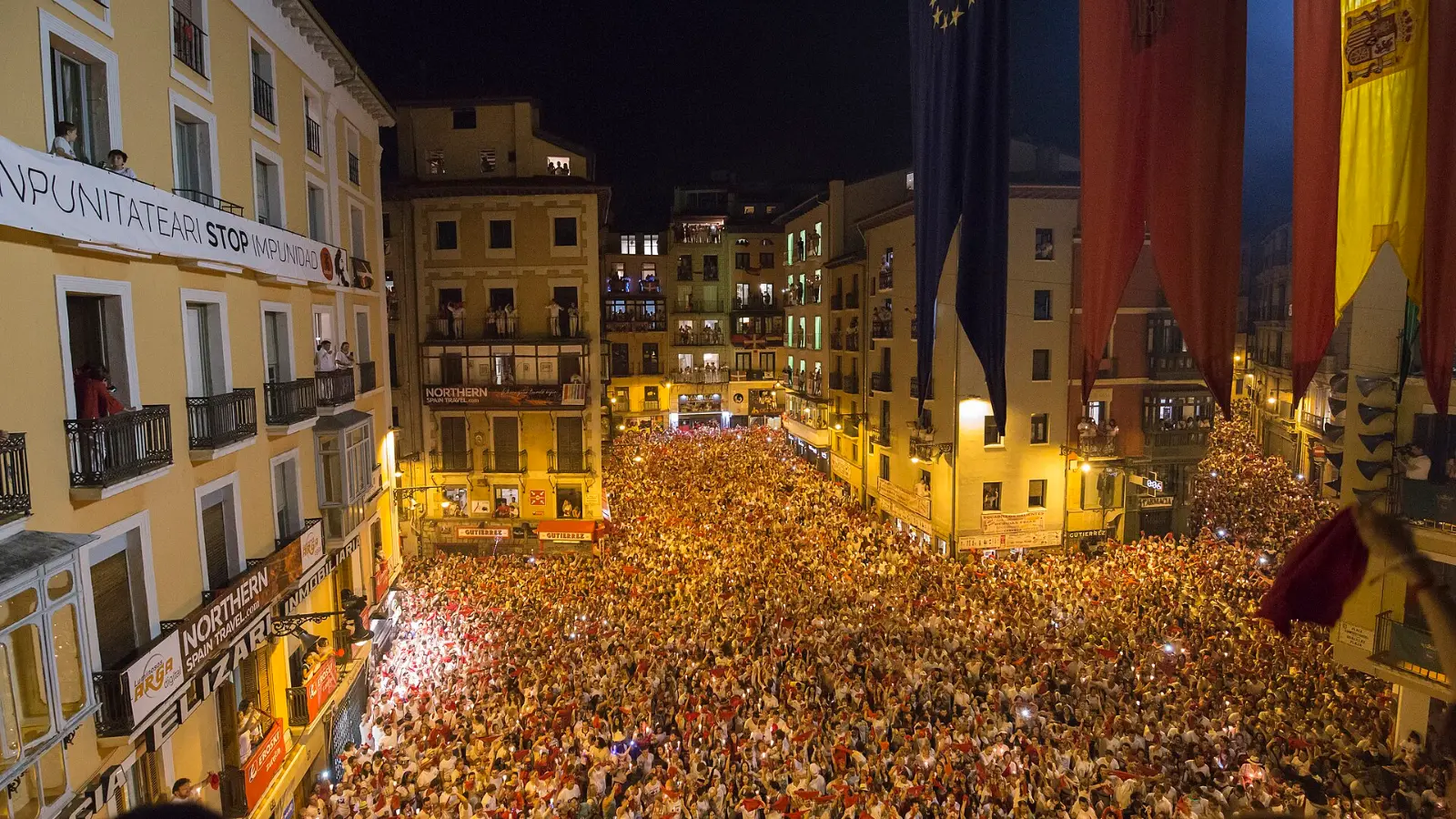
San Fermín starts with an explosion and ends with a whisper. At midnight on July 14, in the same square where the Chupinazo was fired nine days earlier, thousands of people hold up lit candles and sing the Pobre de mí («Poor me»), a slow, sad farewell song that laments that the fiestas are over. From noon on July 6 to midnight on July 14: 204 hours of non-stop party come to an end.
What happens on the night of July 14
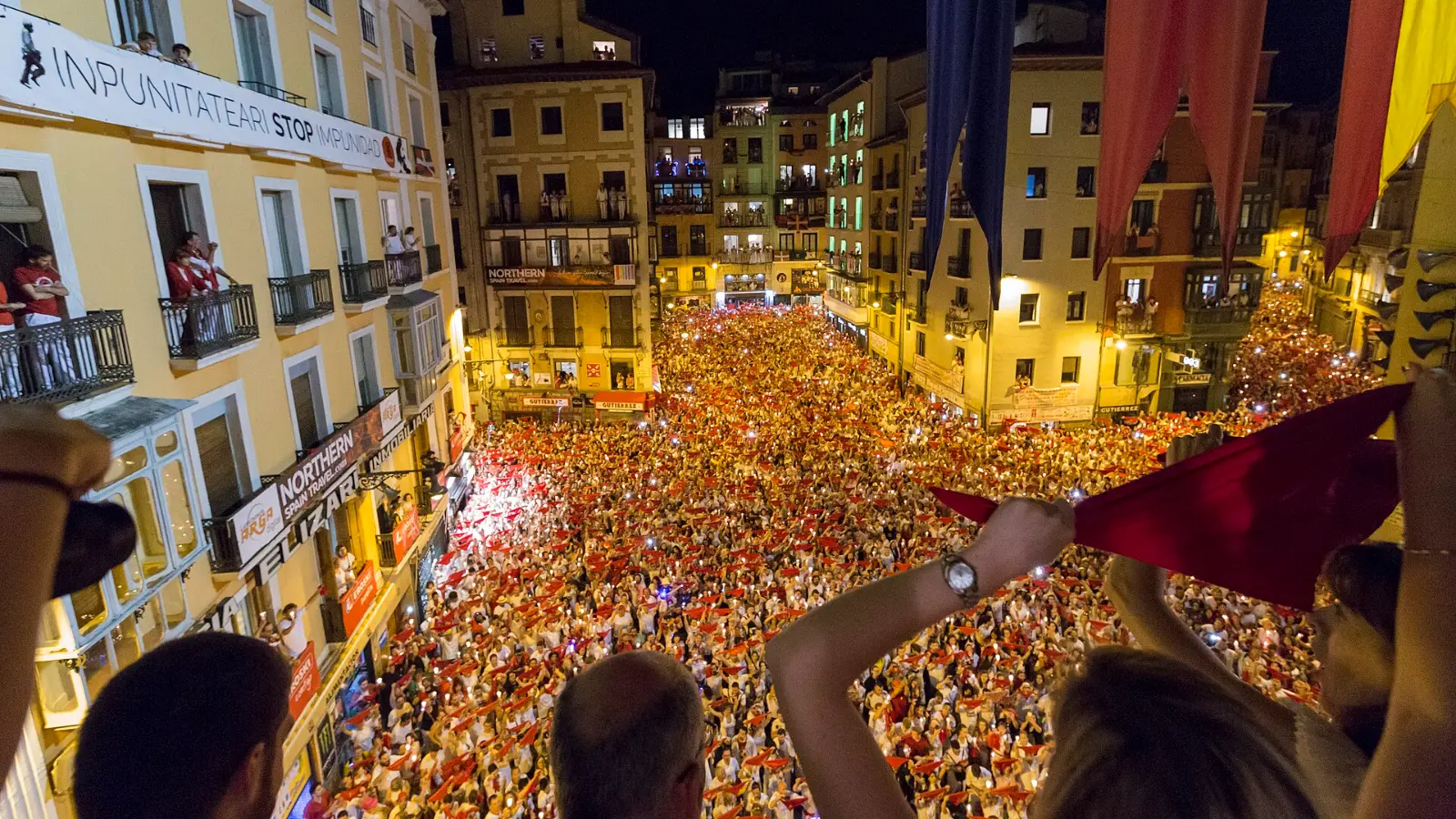
From late evening the crowd gathers in Plaza Consistorial, in front of City Hall, and in the surrounding streets. Many people bring candles; some have been partying for nine days and it shows. Just before midnight, the mayor appears on the City Hall balcony, and at 00:00 the whole square starts singing the farewell song, candles raised. The mood is a mix of tiredness, nostalgia and joy: strangers hug, peña members cry and visitors who arrived a week ago sing as if they were from Pamplona.

Untying the neckerchief
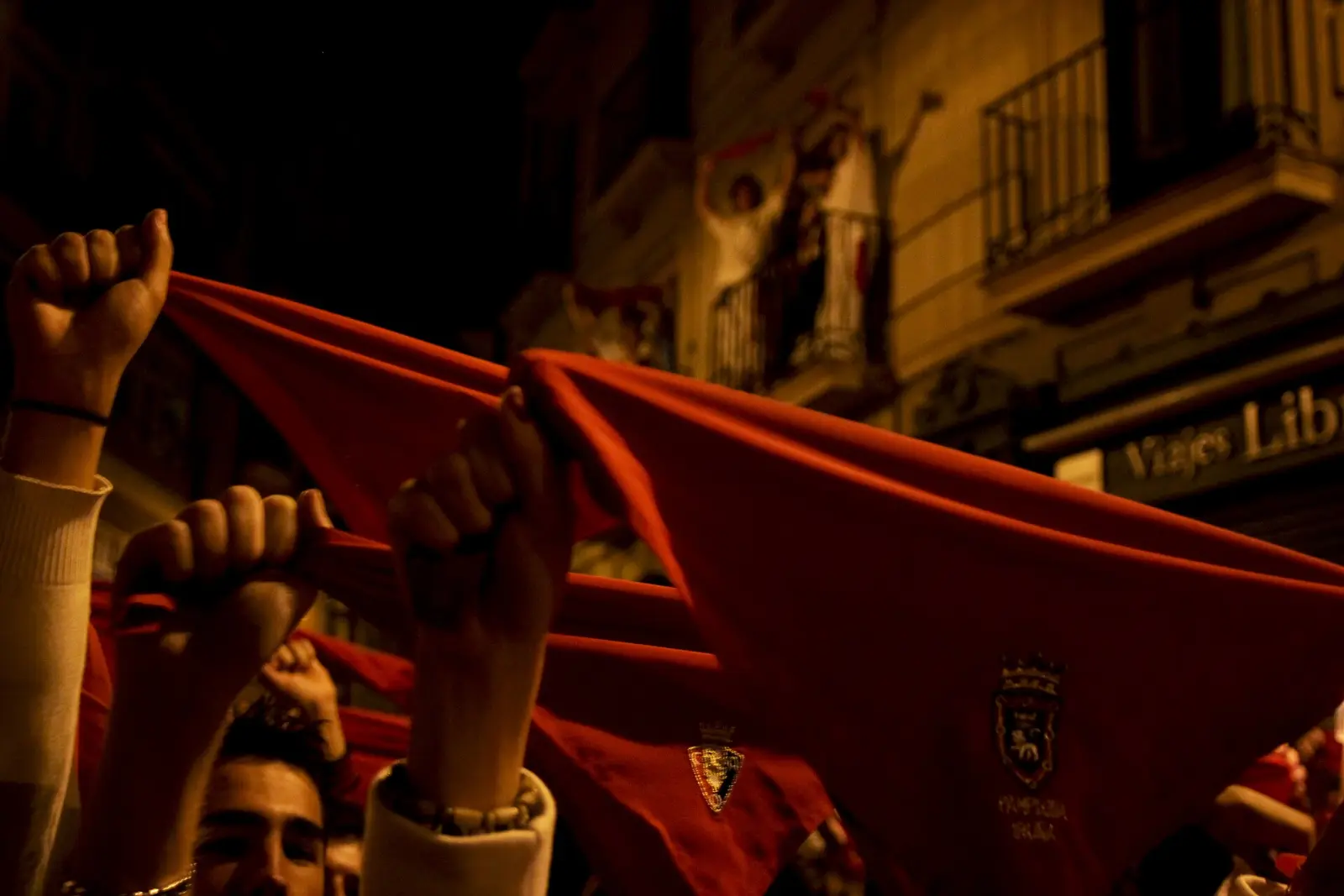
The red neckerchief, tied at the Chupinazo, is the key symbol of the night. During the Pobre de mí people untie it and hold it up, and many keep it as a souvenir until the next year. It closes the circle that began on July 6. If you want to understand the meaning of the white and red, read our guide to the San Fermín outfit.
Where does the Pobre de mí come from?
The most accepted story places its origin in the 1920s, when the Pamplona painter Julián Valencia and his friends walked through the streets with lit candles, as a mock funeral procession for the end of the fiestas. The idea caught on, and the City Council made it an official act in 1968. Today it is, with the Chupinazo, the most symbolic moment of the fiestas. More background in the history of San Fermín.

Tips to experience it
- Arrive early. The square fills up well before midnight; aim for 22:00–22:30 if you want to be in front of the balcony.
- Bring a candle (and a lighter): it is the image of the night. Mind the wax and other people's hair.
- Or see the fireworks first. The last fireworks display of the fiestas starts at 23:00; many people walk to Plaza Consistorial afterwards. You won’t get close to the balcony, but you can sing from the side streets.
- Look after your belongings. It is a dense crowd at night, at the end of nine long days.
- Plan your departure. July 15 is a big travel day; book transport early with our guide on getting to and from Pamplona.
And after midnight?
The fiestas are officially over, but Pamplona does not go to bed: peñas and groups of friends keep singing through the Old Town until dawn, and the countdown to next year begins. The local phrase is «¡Ya falta menos!» («Not long to go now!»). If you are already thinking about July 2027, start with our San Fermín 2027 guide and the day-by-day itinerary.
Frequently asked questions
What time is the Pobre de mí?
At midnight (00:00) at the end of July 14, in Plaza Consistorial, in front of Pamplona City Hall. People start gathering from the late evening.
What do people do during the Pobre de mí?
They hold up lit candles, sing the farewell song together and untie their red neckerchiefs, which they have worn since the Chupinazo on July 6.
When did the Pobre de mí start?
The most accepted origin is in the 1920s, when the painter Julián Valencia and his friends held a mock funeral for the end of the fiestas with candles. It became an official act in 1968.
Do I need to bring a candle?
It is not compulsory, but a candle and a lighter are part of the experience: the candlelit square is the image of the night.
Is there anything after the Pobre de mí?
Officially the fiestas are over, but the Old Town keeps celebrating until dawn and many people start the countdown to the next San Fermín.
In pictures
Pobre de mí pictures: the last day of San Fermín: 10 photos, plus all our San Fermín pictures.