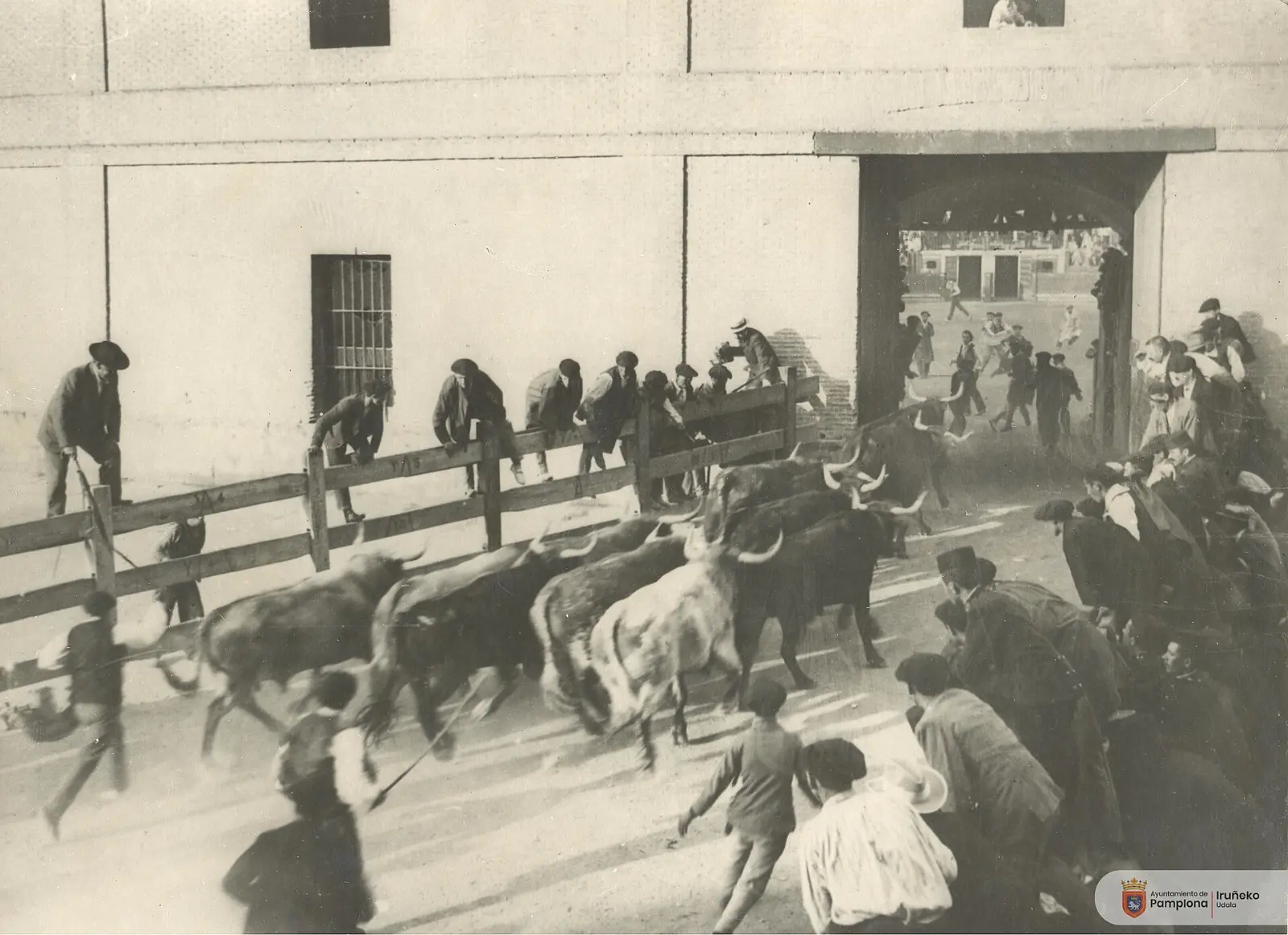
Before it was broadcast to millions of homes, San Fermín was three different celebrations that history slowly merged into one: religious rites in honour of the saint, a livestock fair that brought traders to Pamplona, and bullfights. Simmered for centuries, that mix became the festival we know today.
Who was San Fermín?
According to tradition, Fermín was the son of a Roman senator in Pompaelo, today's Pamplona, baptised by Saint Saturnino (San Cernin) at the spot now known as the Pocico. He became the first bishop of Pamplona, preached in Gaul and died a martyr in Amiens, in northern France. In 1186, bishop Pedro de Artajona brought a relic of the saint from Amiens to Pamplona, and his cult grew from then on. Today he is co-patron of Navarre and is honoured every July 7 with the San Fermín procession.
Three origins: faith, fair and bulls
From the 12th century, Pamplona celebrated the saint with religious acts: vespers, a procession and an octave. In the 14th century, documents already link those dates with livestock fairs and bullfights. Breeders brought animals to sell, the city filled with people, and the bulls that would fight in the afternoon had to be moved from the corrals outside the walls to the bullring. That journey, made at dawn with herders and young men running alongside, is the root of the running of the bulls.
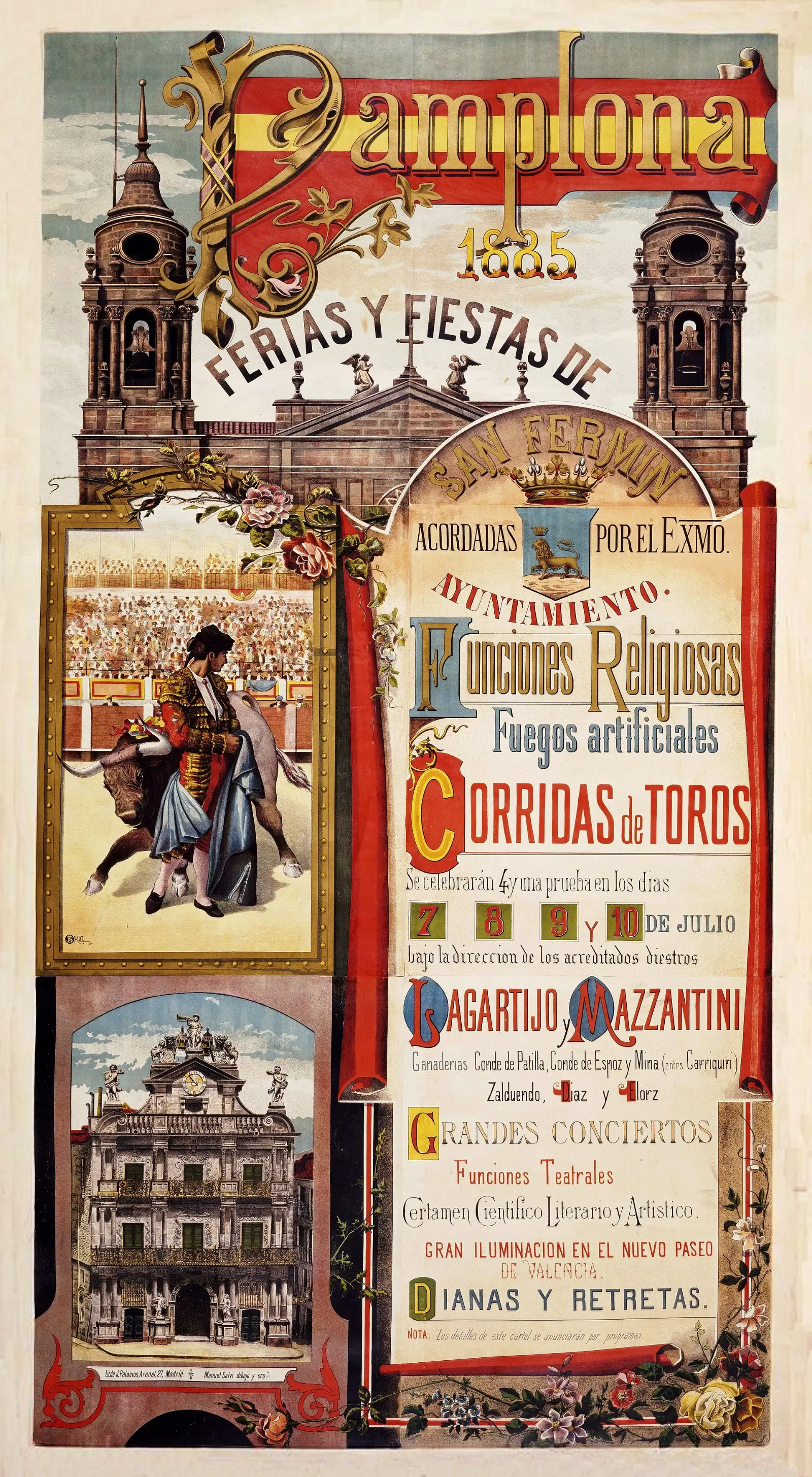

1591: the feast moves to July
For centuries the saint's feast was celebrated on October 10. The autumn weather was often bad, so in 1591 Pamplona moved it to July 7, to coincide with the summer fair. That first July festival already had a proclamation, theatre, dances and bullfights, and soon fireworks. It is considered the beginning of San Fermín as we know it.
The traditions take shape (19th and 20th centuries)
- 1860: the current troupe of giants is made, still dancing through the streets today.
- Late 19th century: the festival gets its first big posters and the programme grows with music, fairs and fireworks.
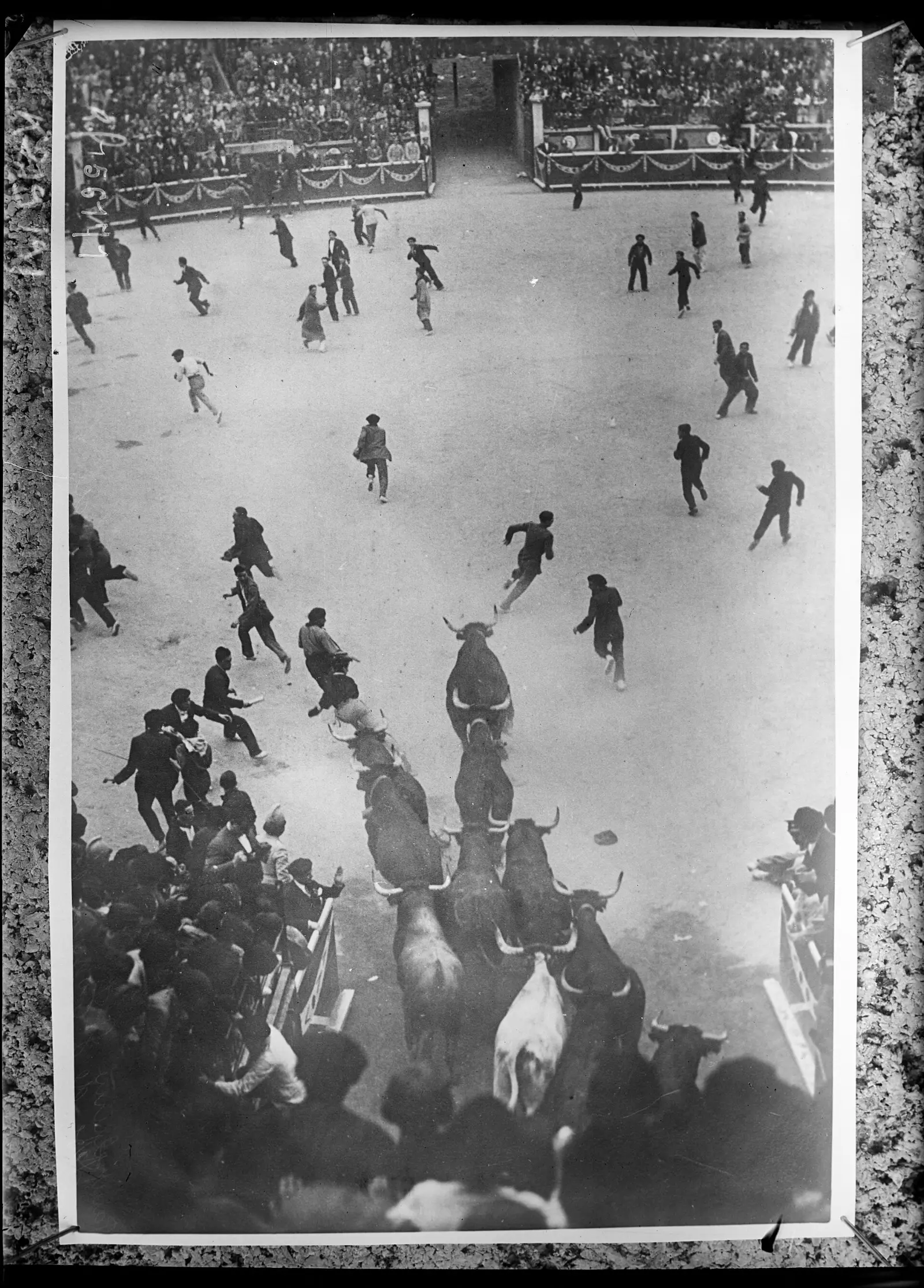
- 1922: the current bullring opens on July 7. The bull run route has kept essentially the same layout since then: Santo Domingo, Town Hall Square, Mercaderes, Estafeta and the Telefónica stretch. Walk it with our route guide.
- 1920s: a group of friends led by painter Julián Valencia invents a mock funeral with candles for the end of the fiestas: the origin of the Pobre de mí, made official in 1968.
- 1931: Juan Etxepare fires the first rockets at noon on July 6; since 1941 the Chupinazo is launched from the City Hall balcony.
_-_btv1b53247751k.jpg)
Hemingway and the leap to worldwide fame
For centuries San Fermín was a local and regional festival. That changed with Ernest Hemingway. The American writer first came to Pamplona in 1923 and set part of his novel The Sun Also Rises (1926), published in Spanish as Fiesta, in the San Fermín week. The book turned the bull run, the bars of Plaza del Castillo and the round-the-clock party into a myth for English-speaking readers. Hemingway returned many times, the last in 1959, and today a monument beside the bullring remembers him.
White and red: a newer tradition than it looks
Old photographs show people in everyday clothes, jackets and berets. The white outfit with the red neckerchief and sash, associated with the peñas, only became the norm in the second half of the 20th century, and today it is the uniform of the fiestas. We explain the meaning of each piece in our guide to the San Fermín dress code.
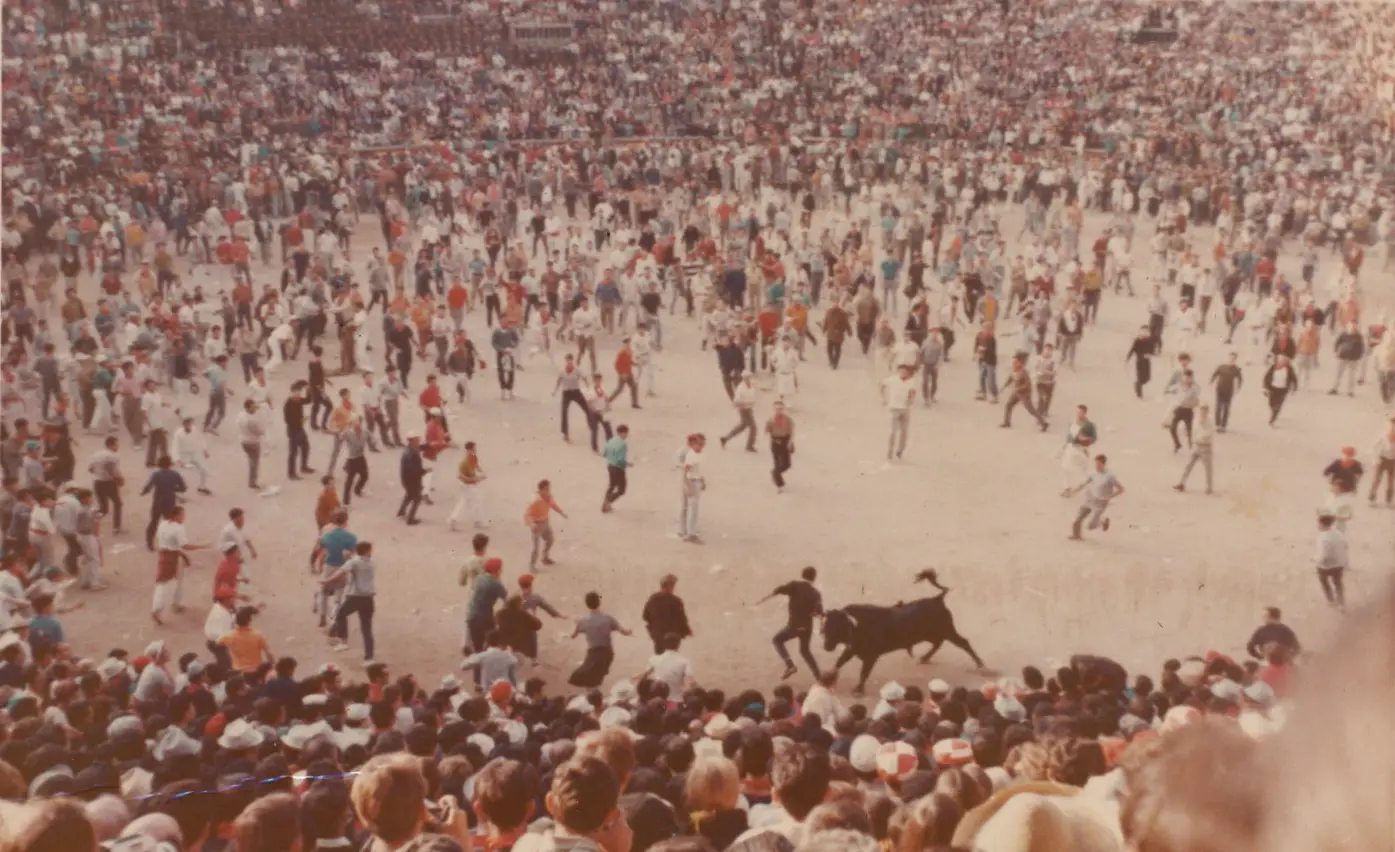

San Fermín today
Today San Fermín runs for nine days, from the Chupinazo at noon on July 6 to the Pobre de mí at midnight on July 14, and draws hundreds of thousands of visitors from all over the world. The core is still the same mix of faith, street party and bulls that took shape centuries ago. If you are planning your visit, start with San Fermín 2027: dates and programme and our day-by-day itinerary, or see what the festival looked like in the past in our historic San Fermín pictures.
Frequently asked questions
How old is San Fermín?
The religious celebrations date back to at least the 12th century and the fairs and bullfights to the 14th. The festival has been held in July since 1591.
Why is San Fermín celebrated in July?
The saint’s feast was originally on October 10. In 1591 Pamplona moved it to July 7 because of the bad autumn weather and to make it coincide with the summer fair.
Who was San Fermín?
According to tradition, he was the son of a Roman senator from Pamplona, the city’s first bishop and a martyr in Amiens, France. He is co-patron of Navarre.
When did the running of the bulls start?
It grew out of the need to move the bulls from the corrals to the bullring before the afternoon bullfight, a practice documented for centuries. The current route dates from the opening of the bullring in 1922.
How did San Fermín become famous worldwide?
Mainly through Ernest Hemingway’s novel The Sun Also Rises (1926), set partly during the fiestas, which made Pamplona famous among English-speaking readers.
In pictures
Historic San Fermín pictures: 20 photos, plus all our San Fermín pictures.