On July 6, 1923, a 23-year-old American journalist arrived in Plaza del Castillo with his wife, Hadley. His name was Ernest Hemingway, and that first San Fermín changed both of them: him, because he found a subject he would write about all his life; Pamplona, because his novel would make its fiestas famous all over the world. A century later, you can still follow his footsteps through the Old Town.
Hemingway and San Fermín, in a few dates
- 1923: first visit. He stays in a private house on Calle Eslava and is fascinated by the bull run and the bullfights.
- 1924–1931: he returns almost every summer, staying at the Hotel Quintana in Plaza del Castillo, whose owner, Juanito Quintana, became a close friend.
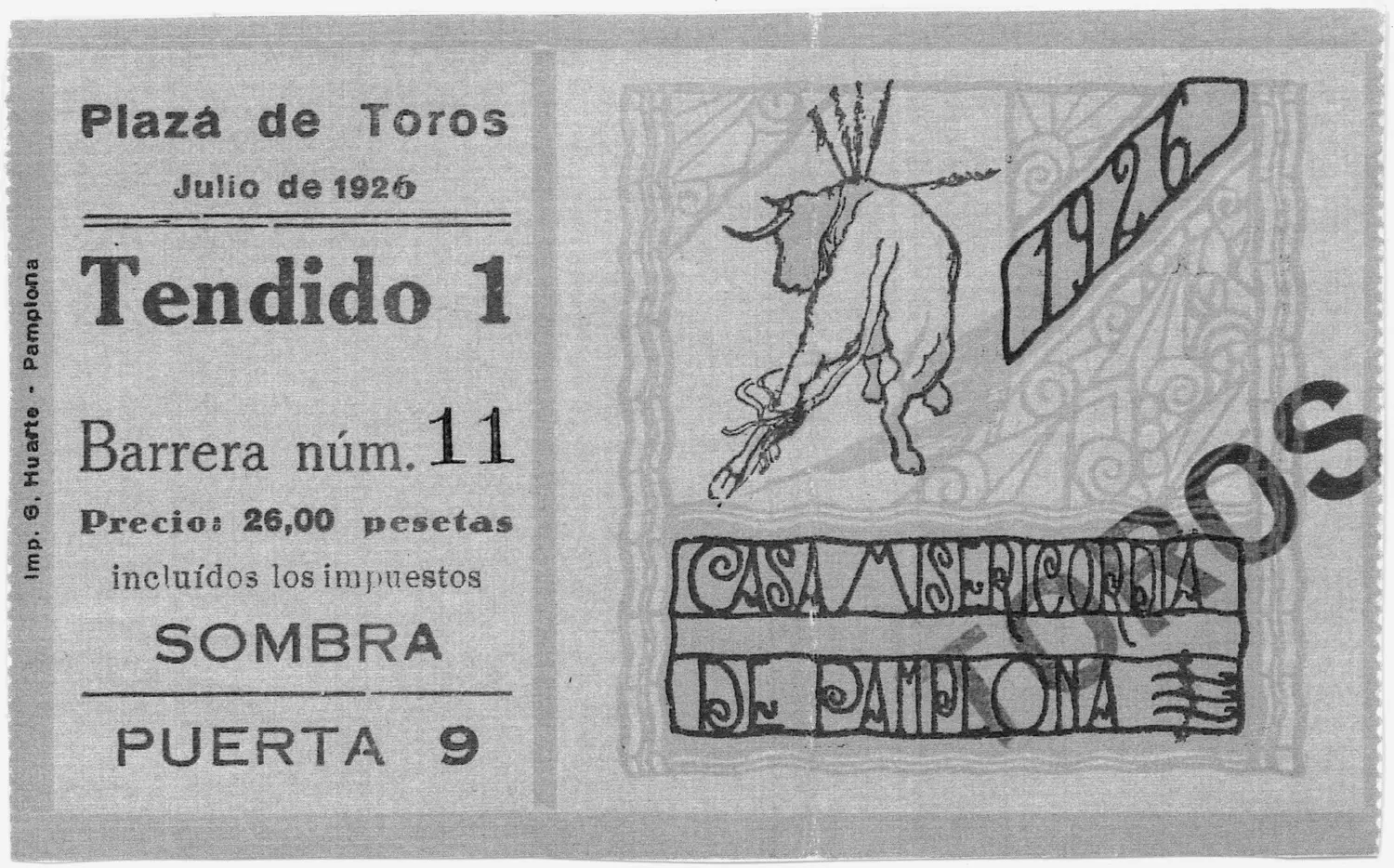
- 1926: The Sun Also Rises is published, known in Spanish as Fiesta. Part of the novel takes place during San Fermín in Pamplona.
- 1953 and 1959: after more than twenty years away, he returns, now world-famous (Pulitzer Prize in 1953, Nobel Prize in Literature in 1954). He stays at the Gran Hotel La Perla, room 217, and in 1959 follows the bullfighter Antonio Ordóñez for the reports later published as The Dangerous Summer.
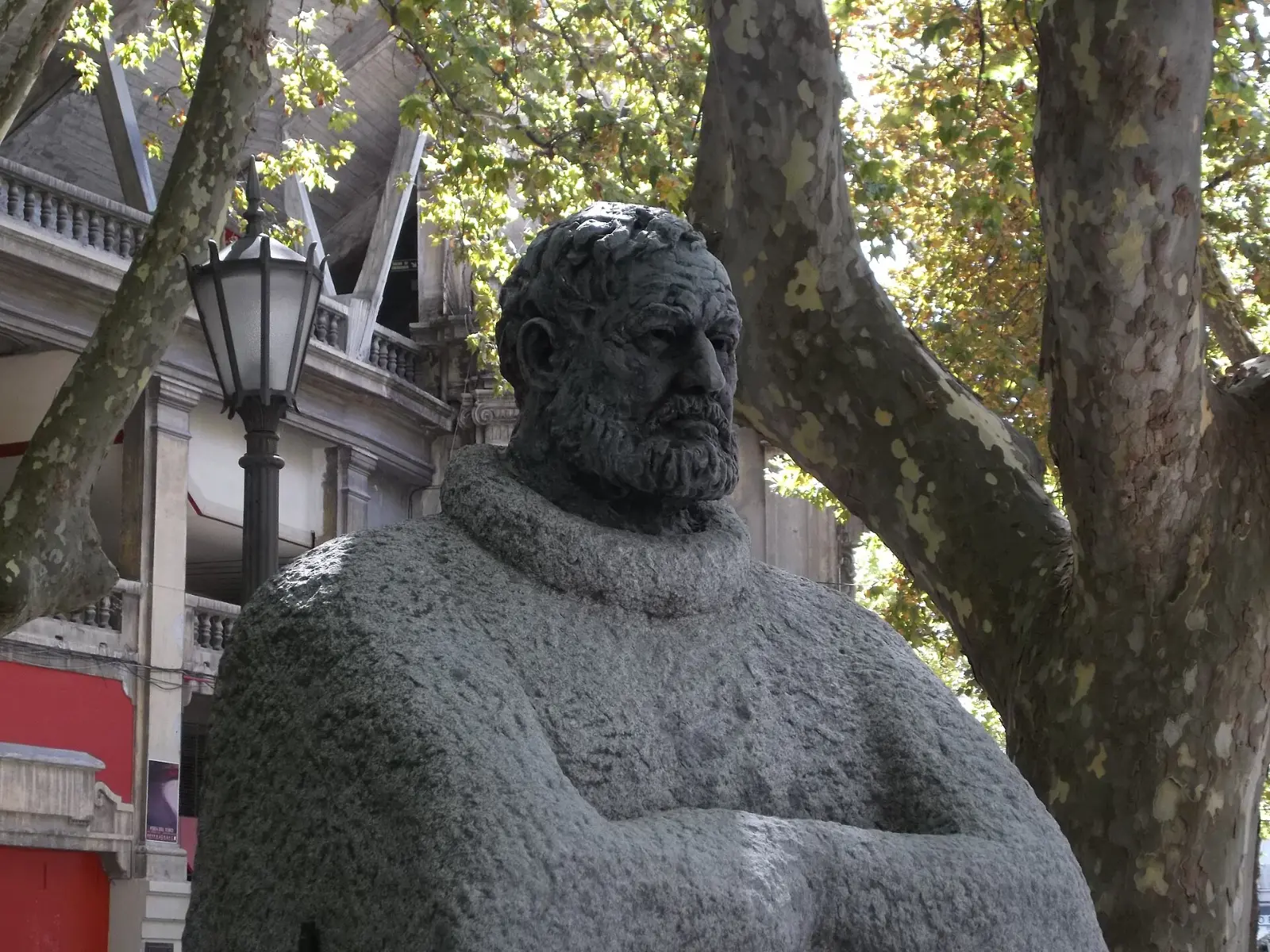
- 1968: seven years after his death, Pamplona inaugurates a monument to him beside the bullring on July 6, attended by his widow, Mary Welsh.
In total he came to the fiestas at least nine times. Read how his visits fit into the bigger picture in the history of San Fermín.

Why The Sun Also Rises matters
Before Hemingway, San Fermín was a local and regional fiesta. His novel follows a group of English-speaking expatriates who travel from Paris to Pamplona for the fiestas: the drinking, the cafés of Plaza del Castillo, the bull run and the bullfights are all there, along with a trip to fish for trout in Burguete, in the Pyrenees. For readers in the United States and Britain, the book turned the fiesta into a myth, and it still brings visitors who first heard of Pamplona in its pages. Some locals welcomed the fame; others felt it brought the excesses that came with it. Both views are part of the story.
.jpg)
A Hemingway walking route through Pamplona
This route links the main places associated with him and takes about two hours at an easy pace. The City Council publishes a longer official route with more than twenty stops.
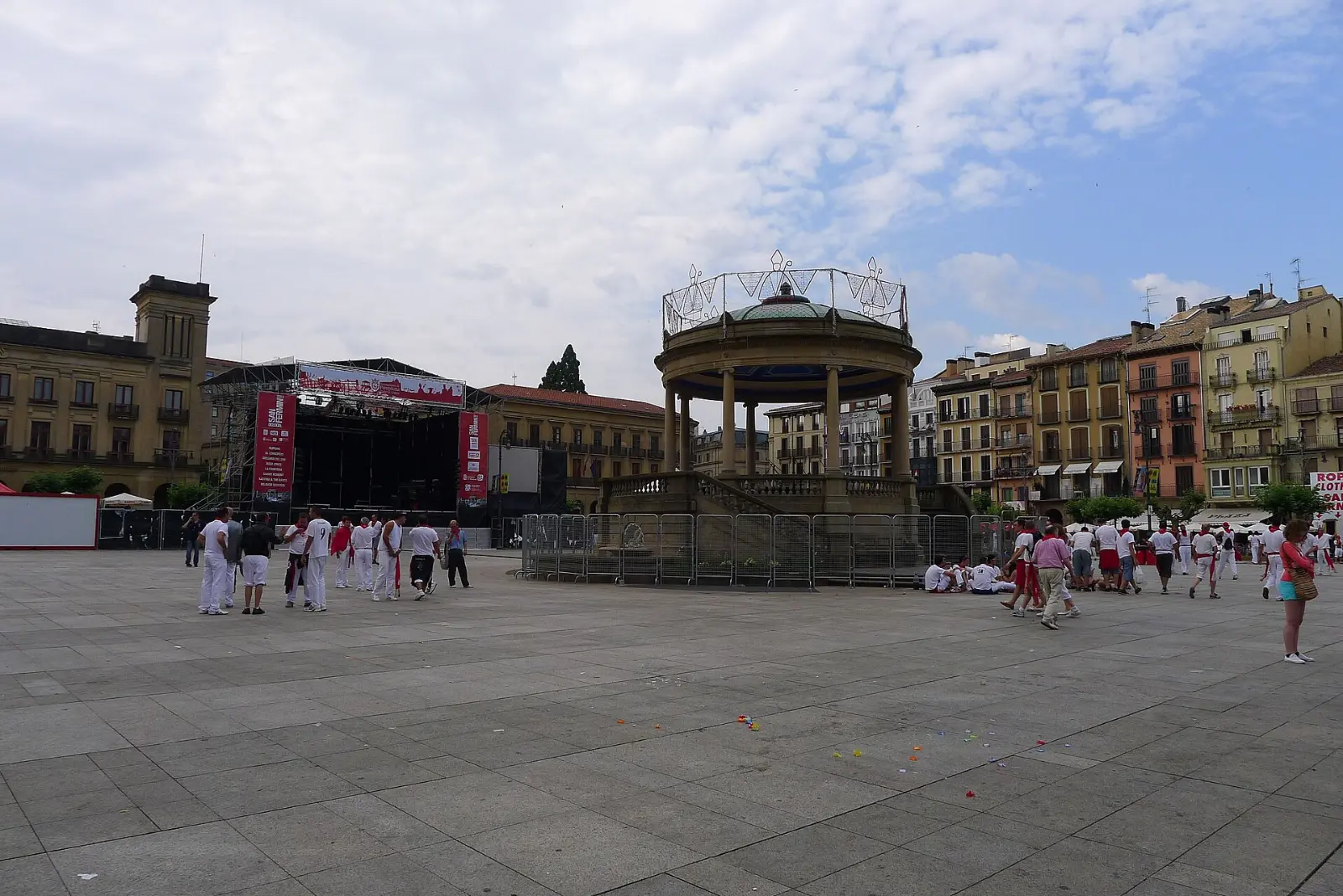
- Plaza del Castillo. Where he arrived in 1923 and the heart of his Pamplona. The Hotel Quintana, his base in the 1920s, stood under the arcades; it no longer exists.
- Café Iruña. Opened on July 2, 1888, it was the first establishment in the city with electric light and appears in the novel. Inside, the Rincón de Hemingway (Hemingway's Corner) has a life-size bronze statue of the writer leaning on the bar.
- Bar Txoko. Also under the arcades of the square, another of his regular spots.
- Gran Hotel La Perla. Opened in 1881, one of the oldest hotels in Spain. In 1953 and 1959 he stayed in room 217, whose balcony overlooks Calle Estafeta and the bull run.
- Calle Eslava, 5. The house where he stayed on his first visit in 1923.
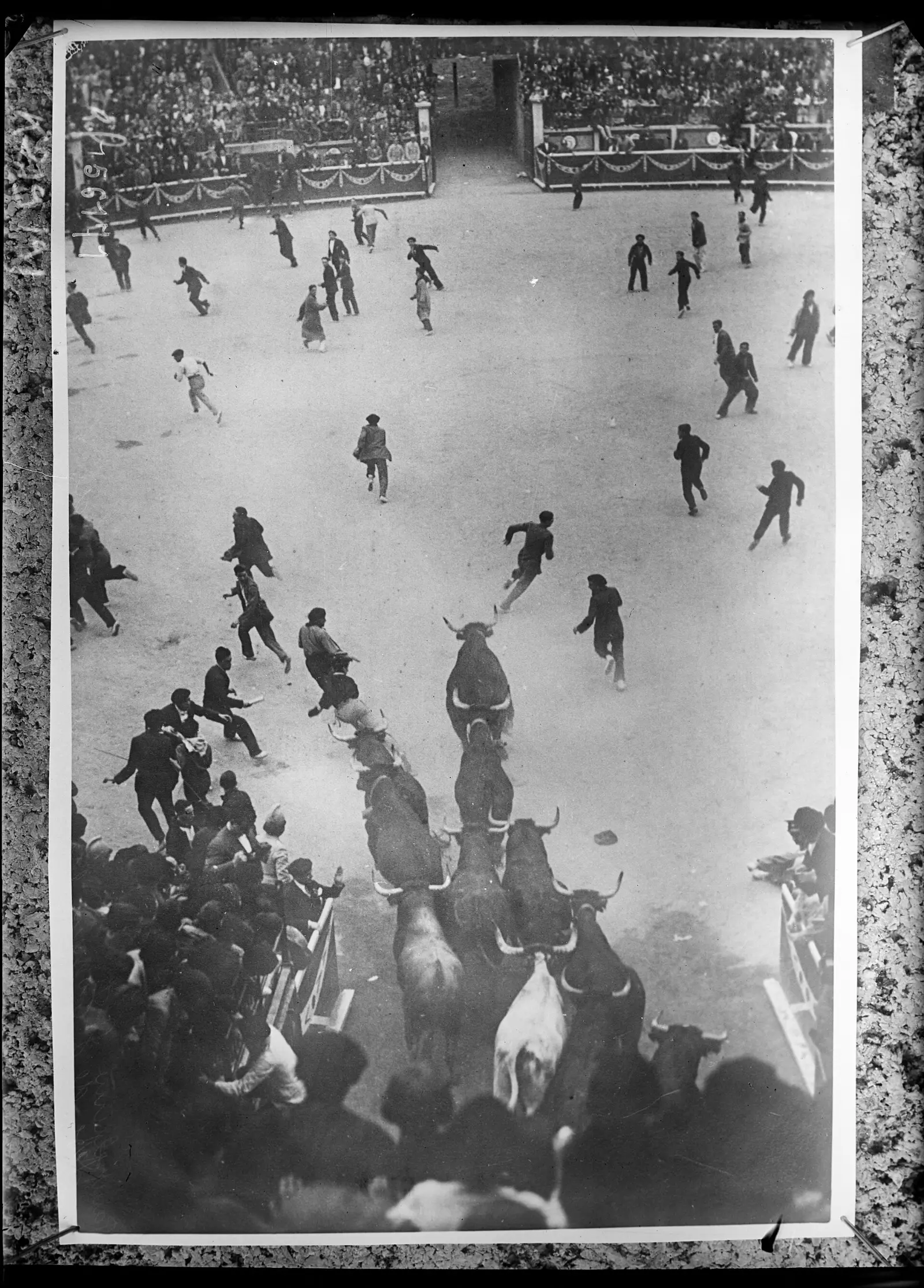
- Calle Estafeta and City Hall. The bull run route he watched and described. At City Hall he got his bullfight tickets through the municipal archivist.
- The Cathedral. He wrote about its dim interior and its big windows.
- San Lorenzo church. Home of the chapel of San Fermín, where he went to pray.
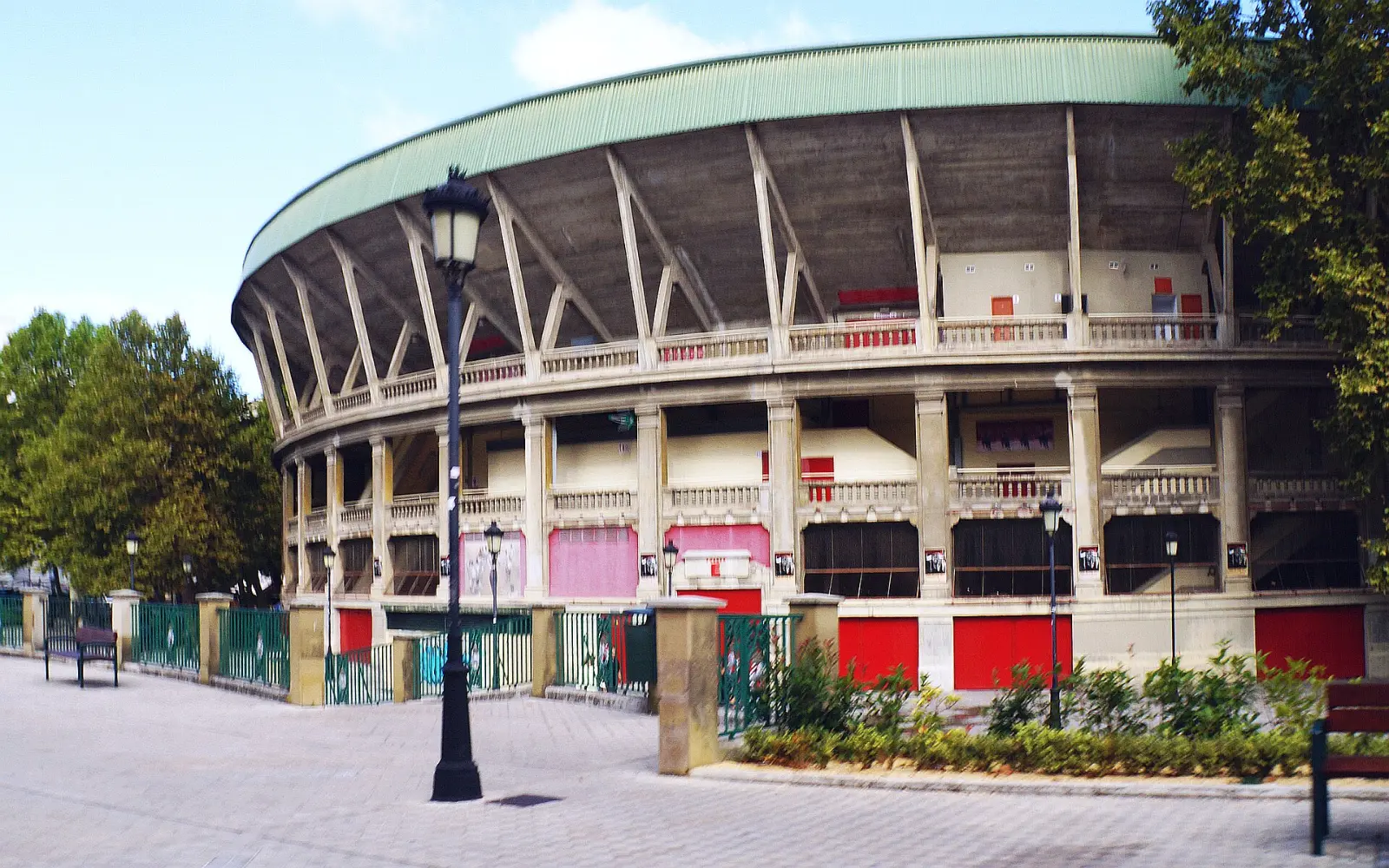
- The bullring and Paseo Hemingway. The bullring, opened in 1922, was the centre of his fiesta. Beside it stands his monument by the sculptor Luis Sanguino, on the avenue that bears his name.
_-_btv1b53247751k.jpg)
Hemingway's Pamplona today
Some of his places have closed, such as the Hotel Quintana and the Casa Marceliano restaurant, which he discovered in 1926 and where he loved the cod dish ajoarriero. Others are still going strong: you can have a coffee in Café Iruña, watch the bull run from a hotel balcony on Estafeta or eat ajoarriero in many Old Town restaurants (see our food guide). Outside the fiestas, the route is calm and easy to enjoy; during San Fermín, the same places are at the centre of the party. Combine it with our guide to what to see in Pamplona and, if you're coming in July, with San Fermín 2027.

Frequently asked questions
How many times did Hemingway go to San Fermín?
At least nine times between 1923 and 1959: almost every summer from 1923 to 1931, and again in 1953 and 1959.
Where did Hemingway stay in Pamplona?
In a private house on Calle Eslava in 1923, at the Hotel Quintana in Plaza del Castillo in the 1920s, and at the Gran Hotel La Perla (room 217) in 1953 and 1959.
Which Hemingway book is about San Fermín?
The Sun Also Rises (1926), published in Spanish as Fiesta. Part of the novel takes place during the San Fermín festival in Pamplona.
Where is the Hemingway statue in Pamplona?
There are two: the monument by Luis Sanguino beside the bullring, on Paseo Hemingway, inaugurated in 1968, and a life-size bronze statue at the bar of Café Iruña in Plaza del Castillo.
Did Hemingway run with the bulls?
He was a passionate spectator of the bull run and the bullfights and took part in the amateur sessions with young cows in the bullring, but he is best known as an observer and chronicler of the fiestas.