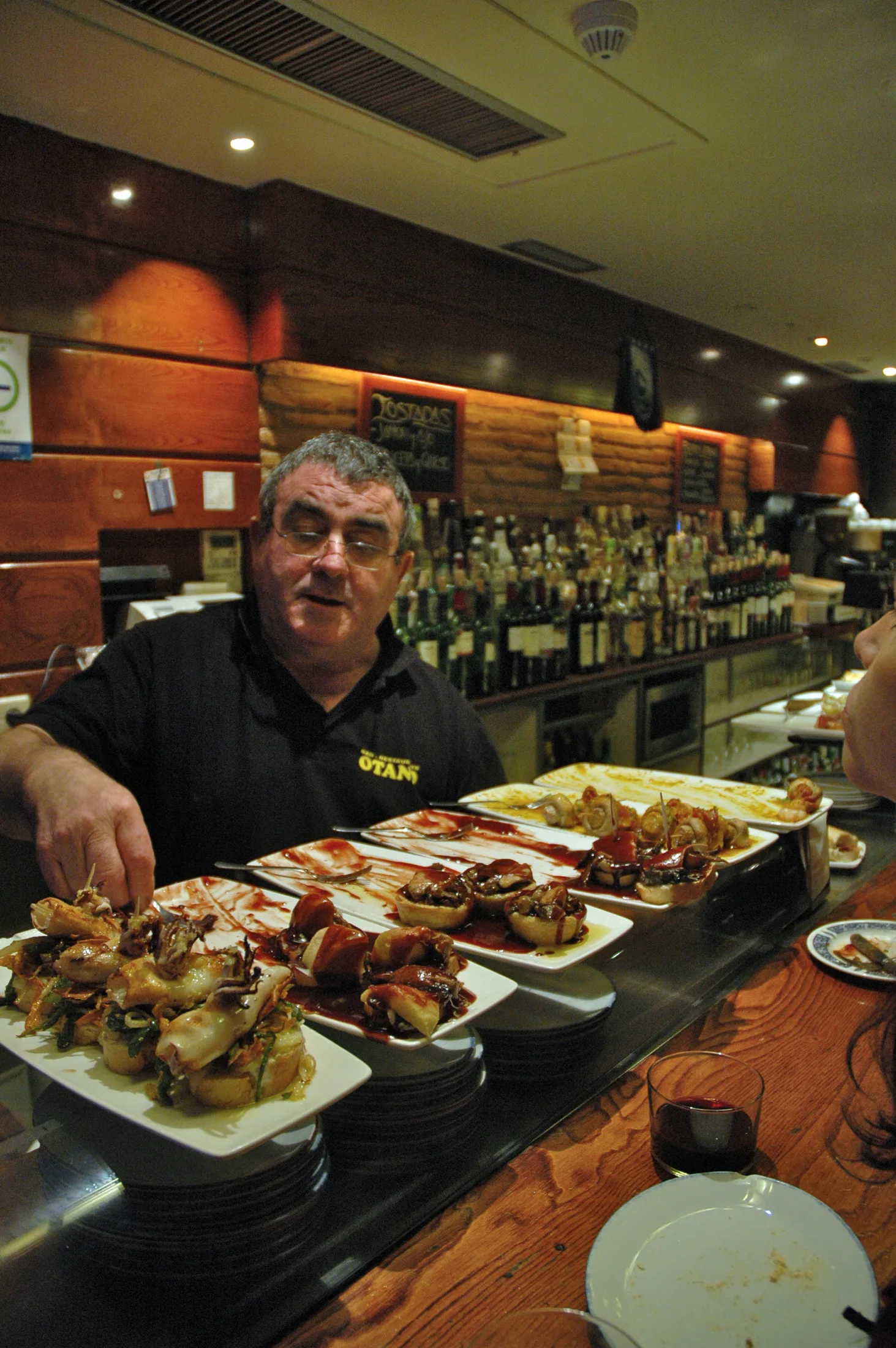
San Fermín is also something you eat and drink. Behind the party, Pamplona has one of the best food traditions in northern Spain, built on the produce of Navarre: vegetables from the Ribera, beans, cured meats, lamb and wine. For nine days the city eats at all hours: a big breakfast after the bull run, pintxos at midday, long lunches with friends and peñas, and something hot at four in the morning. This guide tells you what to order, when, and how to avoid the tourist traps.
A day of eating at San Fermín
- After the bull run: the almuerzo. Fried eggs with chistorra, or churros with hot chocolate.
- Midday: pintxos and vermouth at the bar in the Old Town.
- Lunch, from 2 pm: the long meal of the day, often with friends or a peña, sometimes at tables set up in the street.
- Evening: more pintxos before or after the bullfight.
- Late at night: churros, sandwiches and chistorra rolls from stalls and bars to keep going.
Dishes you have to try
Chistorra. A thin, fresh pork sausage seasoned with paprika, fried and eaten in a roll, with fried eggs or on its own. If San Fermín has a taste, this is it.
Bacalao al ajoarriero. Salt cod cooked with garlic, peppers, tomato and olive oil. A Navarrese classic that is rarely missing from Old Town menus during the festival.
Bull stew and oxtail. Slow-cooked dishes with long ties to the festival's bullfighting tradition. Many restaurants put them on their San Fermín menus.
Pochas. Fresh white beans from Navarre, stewed with vegetables. July is their season, so this is the best time of year to try them.
Magras con tomate. Slices of cured ham in tomato sauce: simple, filling and very local.
Navarre vegetables. Asparagus, piquillo peppers and artichokes from the Ribera turn up as pintxos, starters and side dishes everywhere.
.jpg)
Pintxos: how they work
Old Town bars fill their counters with pintxos: small bites on bread or on a skewer, plus hot ones cooked to order. Ask for what you want, keep track of what you eat and pay at the end; in busy bars the staff will simply ask you what you had. The hot pintxos made when you order are usually the best ones.
The busiest areas are Calle Estafeta, Calle San Nicolás and the streets around Plaza del Castillo. Classics such as Bar Gaucho, near the square, or the historic Café Iruña, on Plaza del Castillo itself, are packed during the festival: go early or outside peak times.
What to drink
Kalimotxo. Red wine mixed with cola: the drink of the street, cheap and shared in big plastic glasses.
Navarre rosé. Navarre is famous for its rosé wines, and a cold glass is the local choice at lunch.
Patxaran. The sloe liqueur of Navarre, served cold after a meal.
Beer and sangria are everywhere too. Drink water between rounds: July in Pamplona is hot and the days are very long.
The churros from La Mañueta
A family churrería founded in 1872 at Calle Mañueta 8, in the Old Town, that still fries its churros over a wood fire. It only opens on a few dates a year: from July 7 to 14, and on Sundays in October. The queue after the bull run is part of the experience.
How to eat well without overpaying
- Book ahead if you want a sit-down lunch on July 6 and 7 or at the weekend.
- Walk two or three streets away from Estafeta and Plaza del Castillo: prices drop and quality often goes up.
- Skip places with laminated photo menus in several languages at the door.
- Look for the San Fermín menus many restaurants offer, and check what is included.
Vegetarian options
It is a meat-heavy festival, but you will not go hungry. Look for Spanish omelette, piquillo peppers, asparagus, vegetable pintxos and grilled vegetables from the Ribera. Pochas and other stews are sometimes cooked with meat, so ask before ordering.
Plan your meals around the day with our San Fermín itinerary for 1 to 4 days, and check what to wear: whites and red wine are a famous combination.
Frequently asked questions
What is the typical food of San Fermín?
Chistorra (a thin fresh pork sausage), salt cod ajoarriero, bull stew, pochas (fresh white beans), magras con tomate and Navarre vegetables such as asparagus and piquillo peppers, plus pintxos in every Old Town bar.
What do people drink at San Fermín?
Kalimotxo (red wine and cola) in the street, rosé wine from Navarre at lunch, patxaran (the local sloe liqueur) after meals, and beer and sangria everywhere.
What is the almuerzo at San Fermín?
The mid-morning meal after the bull run. The classic is fried eggs with chistorra; churros with hot chocolate are the other favourite.
When is La Mañueta churrería open?
During the festival, from July 7 to 14, and on Sundays in October. It is at Calle Mañueta 8, in the Old Town, and has been making churros since 1872.
Is it expensive to eat at San Fermín?
Prices rise during the festival, especially in the busiest streets around Estafeta and Plaza del Castillo. Pintxos and bars two or three streets away from the centre keep costs down.