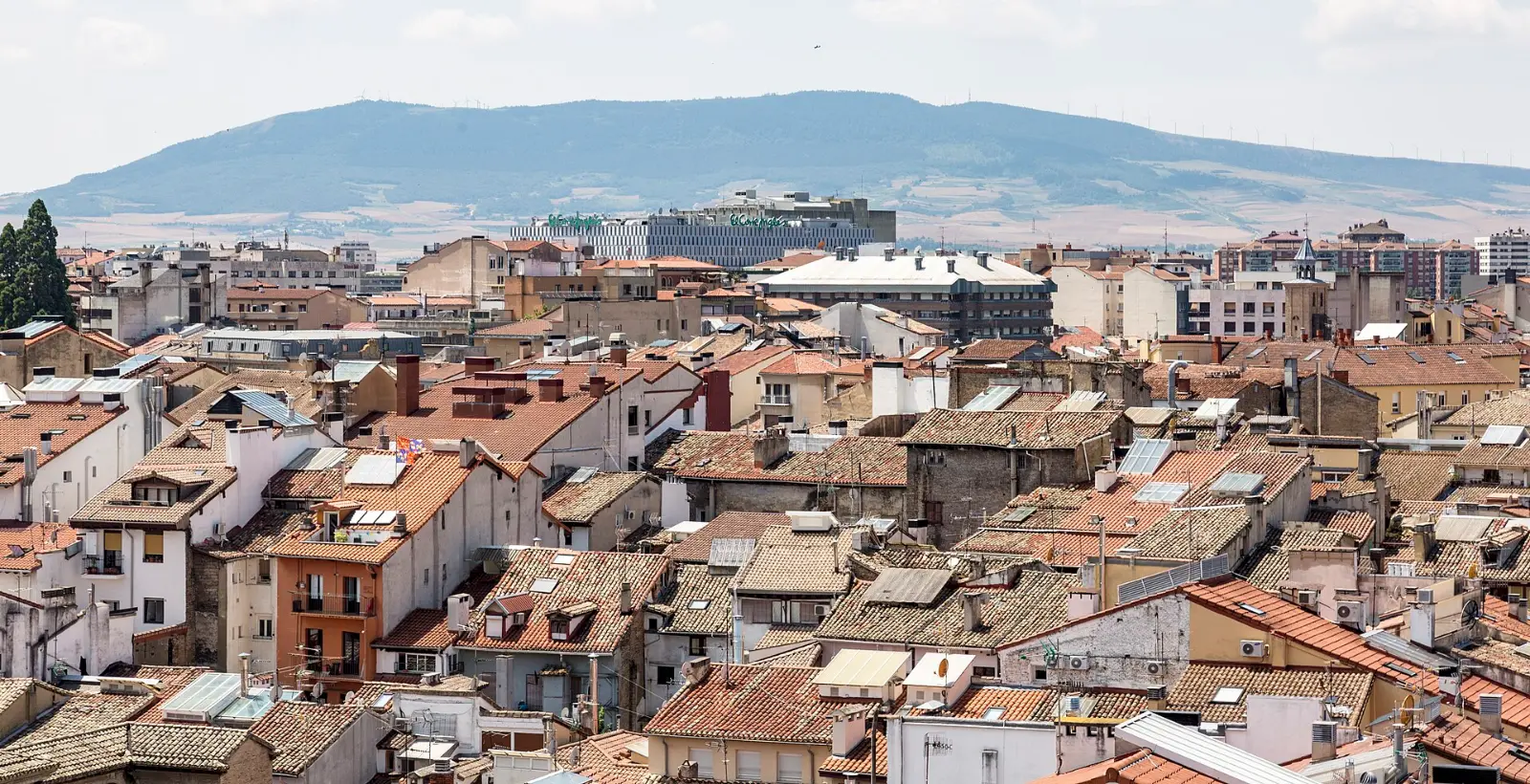
Most people come to Pamplona for the bulls and leave having seen only Estafeta at 8 a.m. That is a pity: the capital of Navarre has a compact, walkable Old Town, some of the best-preserved city walls in Spain and a lot of green space. Here is what is worth seeing, during San Fermín or on a quieter visit, in a route you can walk in a day.
1. Plaza del Castillo and Café Iruña
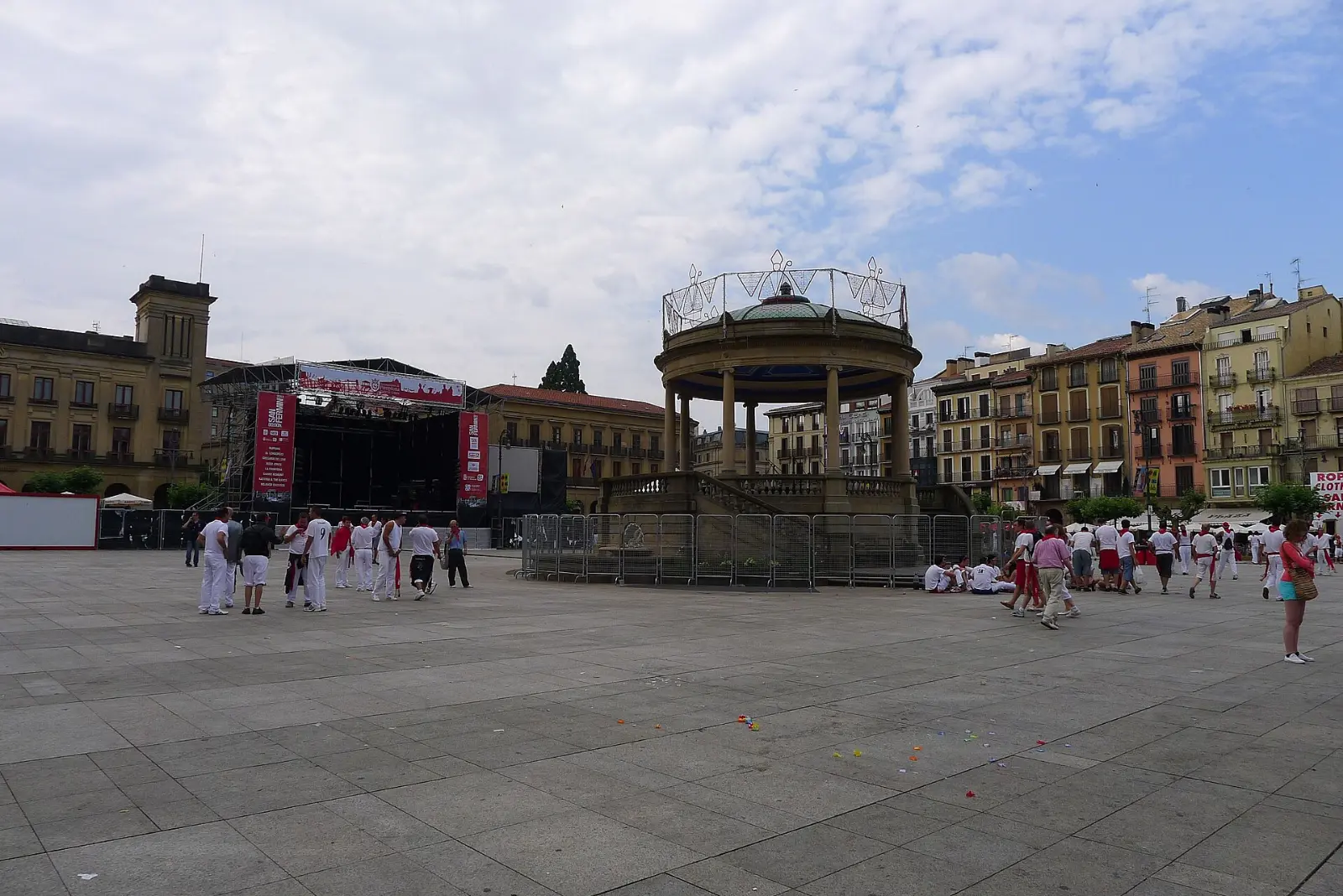
The living room of Pamplona. During the fiestas it is the meeting point for everyone, with its bandstand and terraces. On one side is Café Iruña, opened in 1888, with its Belle Époque interior and a famous link to Hemingway. Next door, the Hotel La Perla overlooks the square and Estafeta.

2. City Hall and Plaza Consistorial
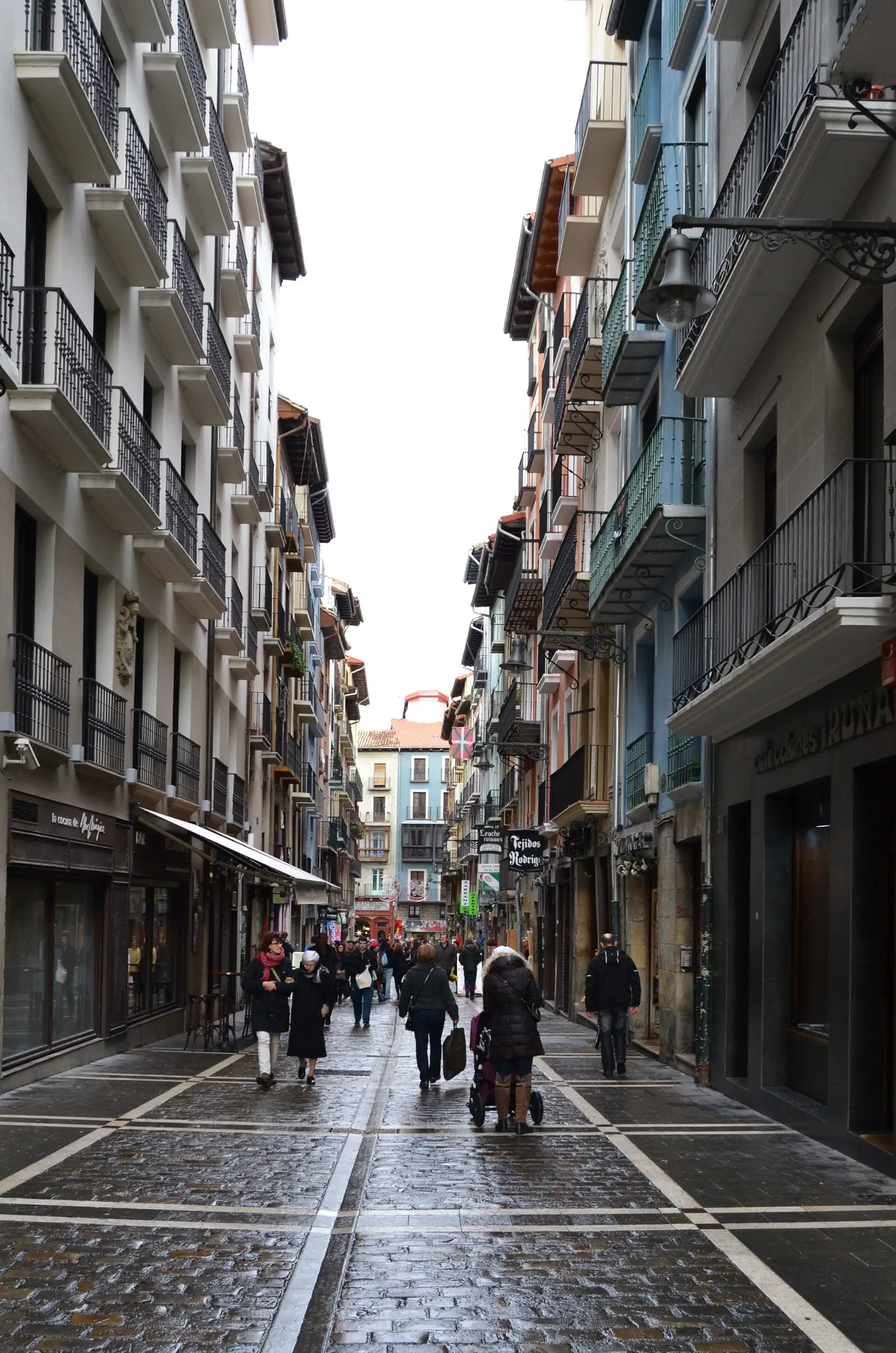
The Baroque façade of the City Hall is the stage of the Chupinazo and the Pobre de mí, and the bulls run right past it every morning. Out of the fiestas, it is a calm square where you can look at the façade in detail.
3. The bull run route
From the Santo Domingo corrals to the bullring, the roughly 850 metres of the run can be walked in 15 minutes: the Cuesta de Santo Domingo, Mercaderes, the famous bend into Calle Estafeta and the Telefónica stretch. Our route guide explains each section.

4. Santa María la Real Cathedral
Behind its neoclassical façade (by Ventura Rodríguez) hides a Gothic cathedral with one of the most beautiful cloisters in Spain and the alabaster tomb of King Carlos III the Noble and Queen Leonor. Its great bell, María, rings on July 7 during the Momentico of the procession.
5. The city walls and the Portal de Francia
Pamplona keeps around five kilometres of walls. Walk along the ramparts to the Portal de Francia, the gate through which pilgrims on the Camino de Santiago still enter the city, and to the viewpoint of the Caballo Blanco, with views over the river Arga and the mountains.
6. The Citadel (Ciudadela)
A star-shaped fortress begun in 1571 under Philip II, today a huge park with exhibition halls. During San Fermín, the fireworks are launched from here every night at 23:00.
7. Taconera Gardens
Pamplona's oldest park, right next to the walls, with deer and birds in the old moat. A perfect place to rest in the shade between plans, especially if you are travelling with children.
8. San Lorenzo and San Saturnino
The church of San Lorenzo, on Calle Mayor, houses the chapel with the statue of San Fermín. A few steps away, San Saturnino (San Cernin) is one of the oldest churches in the city; next to it is the Pocico, where, according to tradition, the saint was baptised.

9. Pintxos in San Nicolás and Estafeta
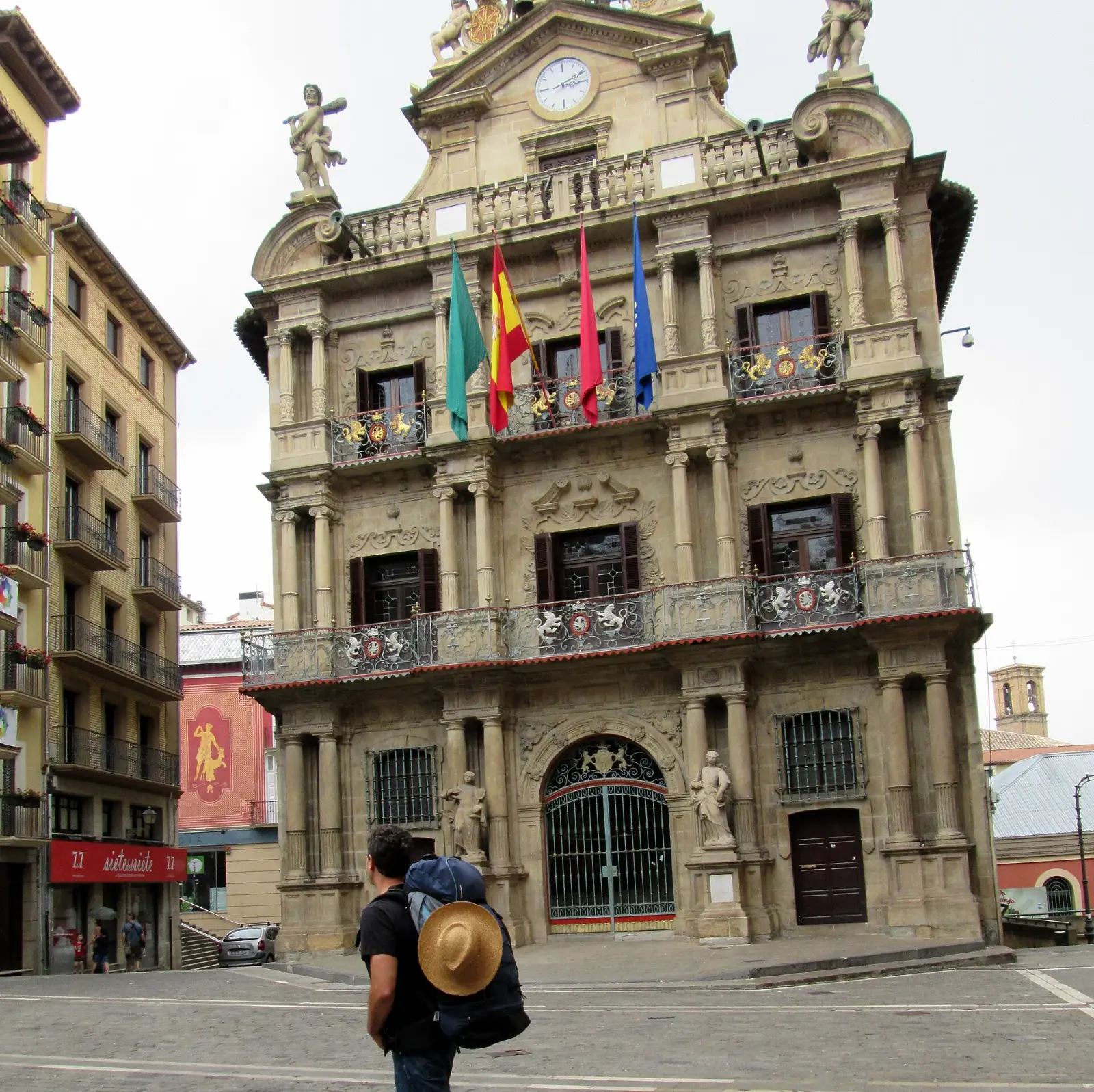
Pamplona is a pintxo city. Calle San Nicolás, Calle Estafeta and Calle San Gregorio are lined with bars where you can eat well standing at the counter. See our food guide to San Fermín.
10. The bullring and the Encierro monument
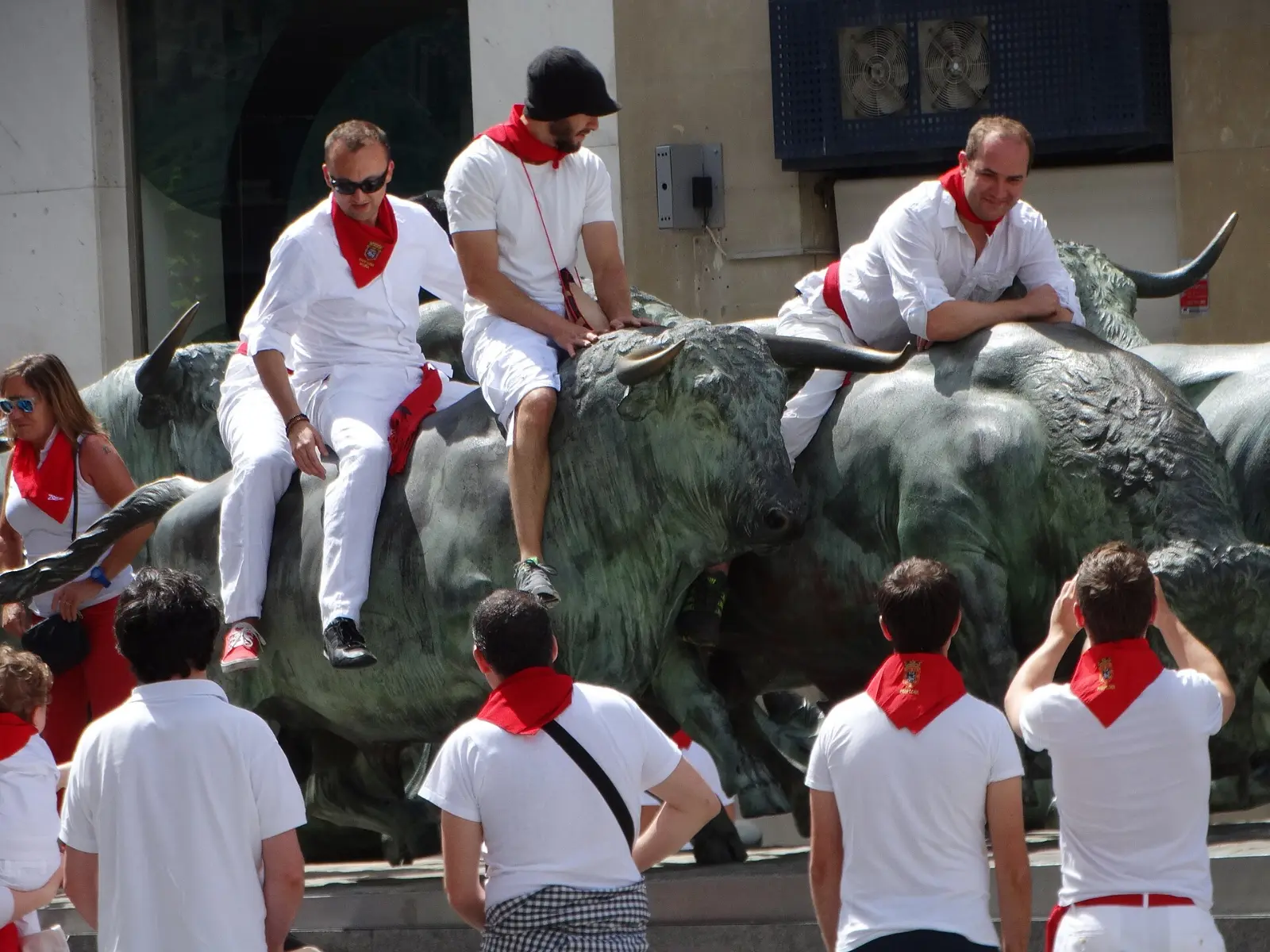
The bullring, opened in 1922, can be visited outside the fiestas; beside it stands the bust of Hemingway. On Avenida Roncesvalles, the bronze Encierro monument recreates a run at full speed: a classic photo, as long as you don't climb on it.

11. Museum of Navarre
Housed in an old hospital by the walls, it covers the history of Navarre from Roman mosaics to Goya's portrait of the Marquis of San Adrián.
12. Day trips from Pamplona
- Olite (about 45 minutes south): the fairy-tale royal palace of the kings of Navarre and wine cellars.
- Bardenas Reales: a semi-desert natural park with spectacular eroded landscapes.
- Roncesvalles and the Irati Forest: Pyrenean villages, the start of the Camino in Spain and one of Europe's largest beech and fir forests.
- San Sebastián: about an hour away by road, for the beach and the pintxos.
To fit all this into your trip, use our day-by-day itinerary or the perfect day in San Fermín, and find where to stay on our accommodation page.
Frequently asked questions
What is there to see in Pamplona besides the running of the bulls?
The Old Town, Plaza del Castillo and Café Iruña, the Cathedral and its cloister, the city walls and the Portal de Francia, the Citadel, Taconera Gardens, the churches of San Lorenzo and San Saturnino and the Museum of Navarre.
How many days do you need to see Pamplona?
One full day is enough to see the Old Town, the walls and the Cathedral. With two or three days you can add a day trip to Olite, the Bardenas Reales or the Pyrenees.
Can you walk the running of the bulls route?
Yes. Outside the run hours it is a normal street route of roughly 850 metres from the Santo Domingo corrals to the bullring, which takes about 15 minutes on foot.
Where is the statue of San Fermín?
In the chapel of San Fermín inside the church of San Lorenzo, on Calle Mayor. It leaves the church only for the procession on July 7.
What are the best day trips from Pamplona?
Olite and its royal palace, the Bardenas Reales desert park, Roncesvalles and the Irati Forest in the Pyrenees, and San Sebastián, about an hour away.