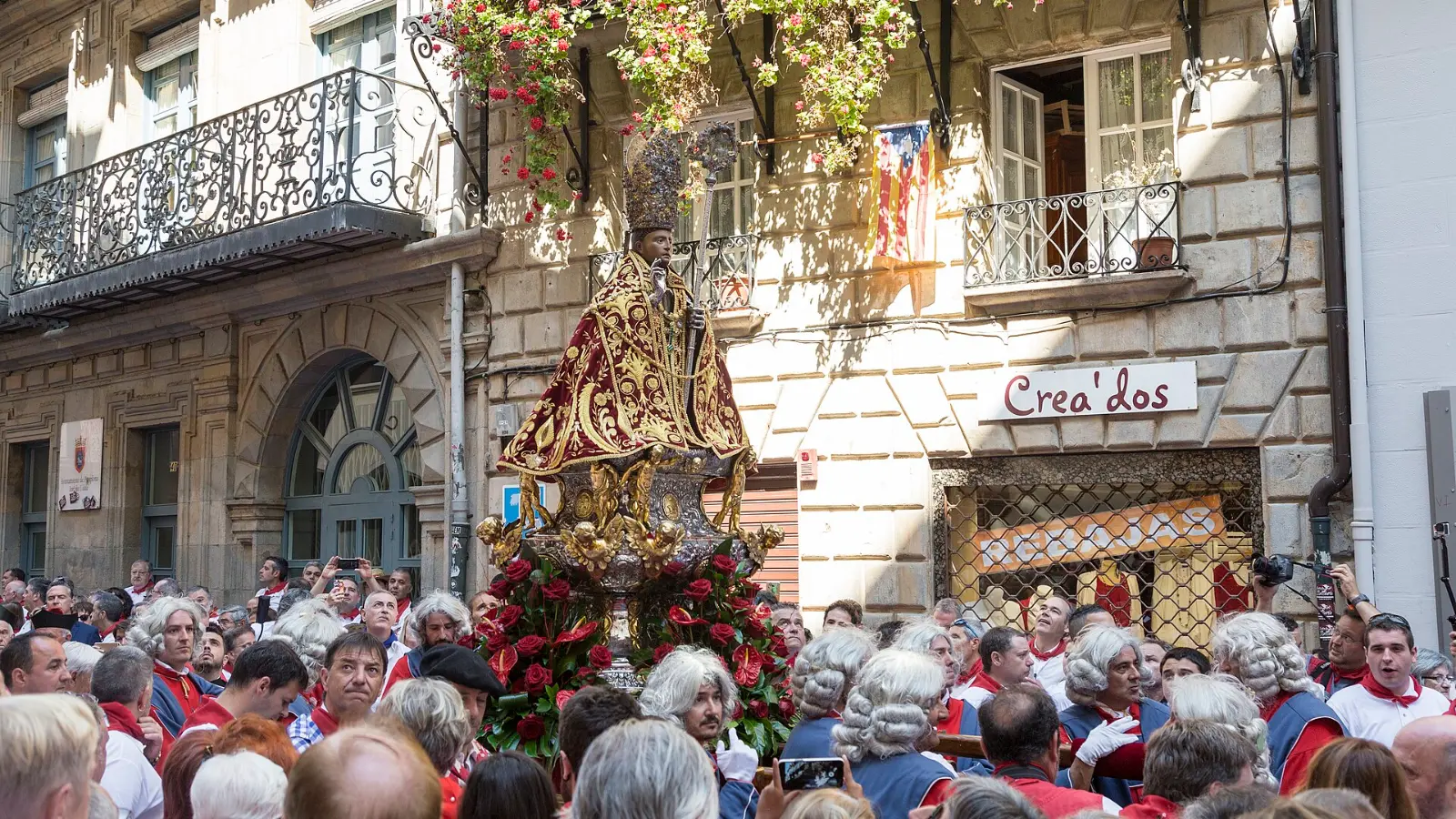
Between bull runs, brass bands and rockets, it is easy to forget that San Fermín is first of all a feast day. On the morning of July 7, the day of the saint, the statue of San Fermín leaves the church of San Lorenzo and is carried through the Old Town of Pamplona, escorted by giants and big-heads, dancers, musicians, the City Council in gala dress and the Cathedral chapter. It is the most solemn act of the fiestas, and one of the most beautiful.
Timetable for July 7
The order of events has been stable for years; check the official programme in June for any change.
- 8:00 First running of the bulls of the fiestas. See our running of the bulls guide.
- 9:50 The City Council (the Corporación) leaves City Hall in procession, with mace-bearers, kettledrummers and trumpeters.
- 10:00 The council picks up the Cathedral chapter (Cabildo) at the Cathedral.
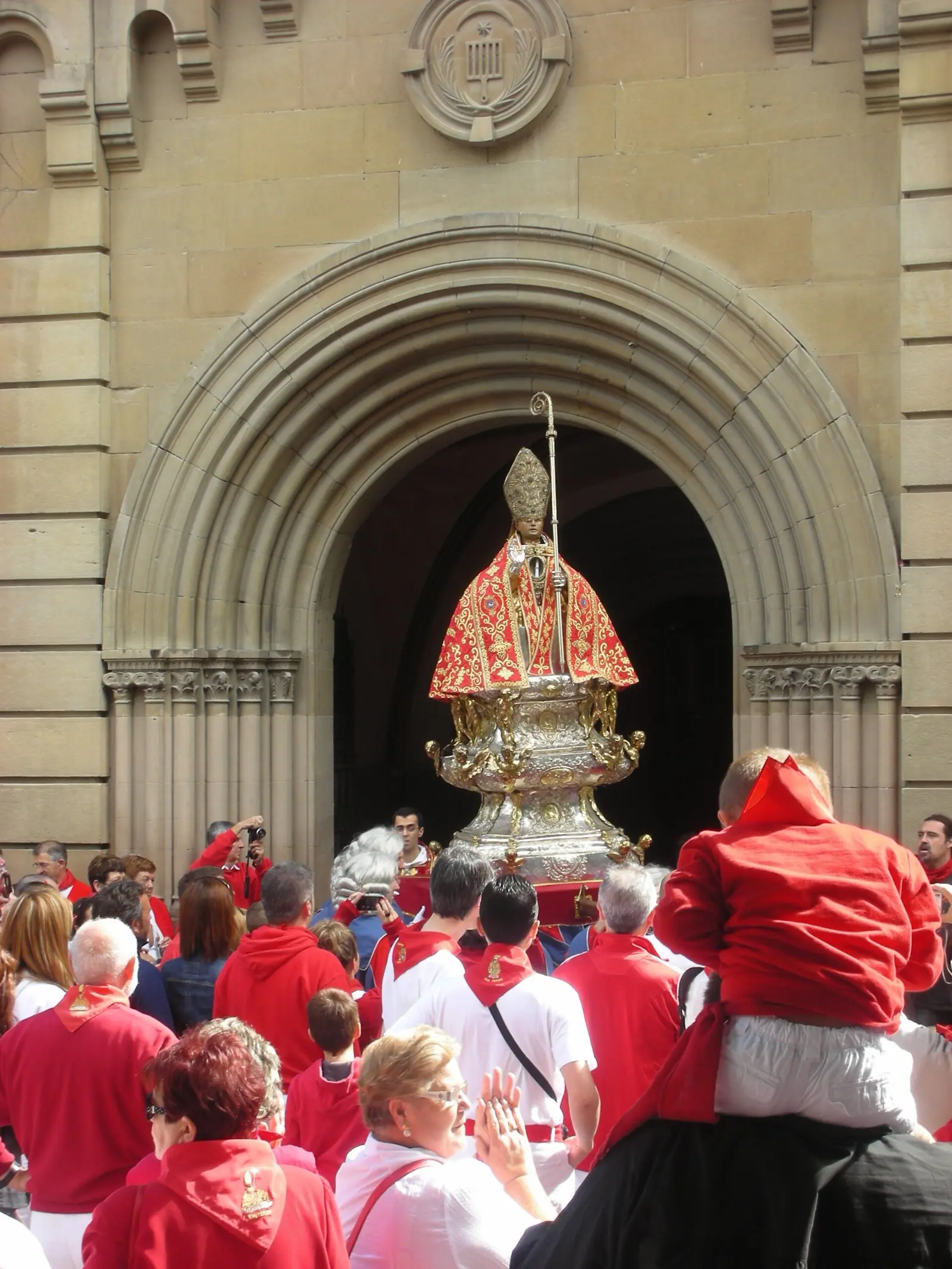
- 10:30 The statue of San Fermín leaves the church of San Lorenzo and the procession starts.
- Around 10:55 In the Old Town, a jota is sung to the saint.
- Around 11:15 Stop at the Pocico of San Cernin: roses are offered and dancers perform the Agur Jaunak.
- Around 12:00 The statue returns to its chapel in San Lorenzo, followed by mass.
- 14:00 El Momentico at the Cathedral: the giants dance as the great bell, María, rings.
- Around 14:15 The Duguna dancers perform in Plaza Consistorial.
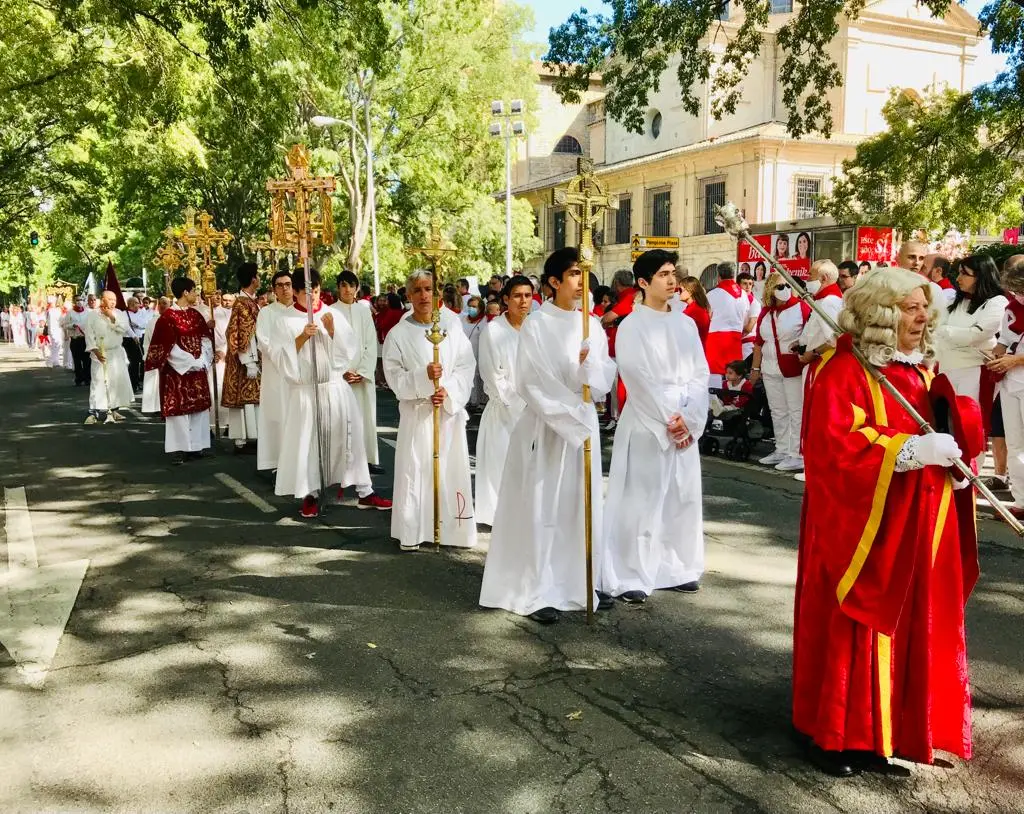

Who walks in the procession
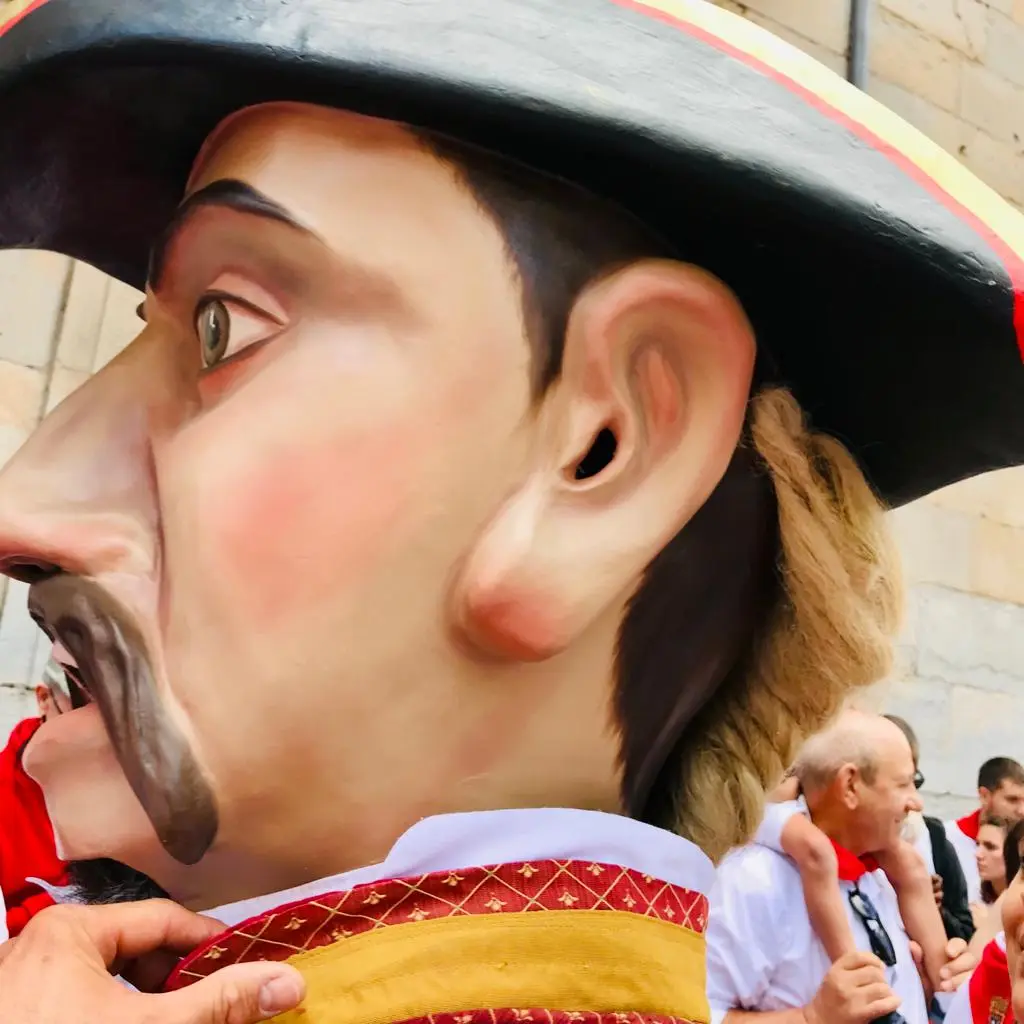
The procession is a moving portrait of the city. At the front come the giants, big-heads and kilikis, which open the way for the saint. Behind them walk txistularis (Basque flute players), dance groups, religious brotherhoods, the clergy and the Cabildo, the City Council in tailcoats and top hats behind its maces, and the municipal band. The statue itself shows the saint as a bishop, with mitre and crozier, and is carried on a pedestal by bearers, surrounded by flowers. It is followed by hundreds of people from Pamplona, many in their best white-and-red outfit.

The route and the best moments
The procession leaves San Lorenzo (Calle Mayor) and loops through the oldest streets of the Old Town before returning to the church. Two moments are especially moving:
- The jota. At one of the stops, a singer performs a jota (the traditional Navarrese song) dedicated to the saint. The street goes quiet and a single voice fills it: many locals cry.
- The Pocico de San Cernin. At this small well near the church of San Saturnino, roses are offered to the saint and dancers perform the Agur Jaunak, a Basque dance of salute and respect.
Later, at 14:00, the Momentico takes place at the Cathedral: as the council returns from the religious ceremonies, the giants dance at the Cathedral while the María bell rings, one of the most photographed scenes of July 7.
Where and how to watch it
- No ticket is needed. Find a spot along the route around 9:45–10:00, after the bull run, as the narrow streets fill up quickly.
- Calle Mayor, near San Lorenzo, is good to see the statue come out; the area around San Saturnino is good for the Pocico.
- Respect the solemnity. It is a religious act: avoid shouting, keep the drink away from the front row and make way for the participants.
- It is a great family plan: the morning is calmer than other acts and children love the giants. See San Fermín with kids.

Why July 7 matters
San Fermín is the co-patron of Navarre and, according to tradition, the first bishop of Pamplona. The fiestas started as a religious celebration in his honour and grew over the centuries with fairs, music and bulls, as we explain in the history of San Fermín. The procession is the moment where that origin is most visible. If you are only in Pamplona for a couple of days, our itinerary shows how to fit the bull run, the procession and the evening fireworks into the same day.
Frequently asked questions
What time does the San Fermín procession start?
The statue of San Fermín leaves the church of San Lorenzo at 10:30 on July 7. The City Council sets off from City Hall at 9:50 and collects the Cathedral chapter at 10:00.
How long does the procession last?
The walk through the Old Town takes about an hour and a half; the statue is back in San Lorenzo around 12:00. The Momentico at the Cathedral follows at 14:00.
Do I need a ticket to see the procession?
No. It is a free public act. Just find a spot along the route in the Old Town before 10:30.
What is the Pocico de San Cernin?
A small well near the church of San Saturnino where the procession stops: roses are offered to the saint and dancers perform the Agur Jaunak.
Can I watch the running of the bulls and the procession on the same day?
Yes. The bull run is at 8:00 and lasts a few minutes, and the statue leaves San Lorenzo at 10:30, so there is time to have breakfast and get a spot.
In pictures
San Fermín procession pictures (July 7): 7 photos, plus all our San Fermín pictures.