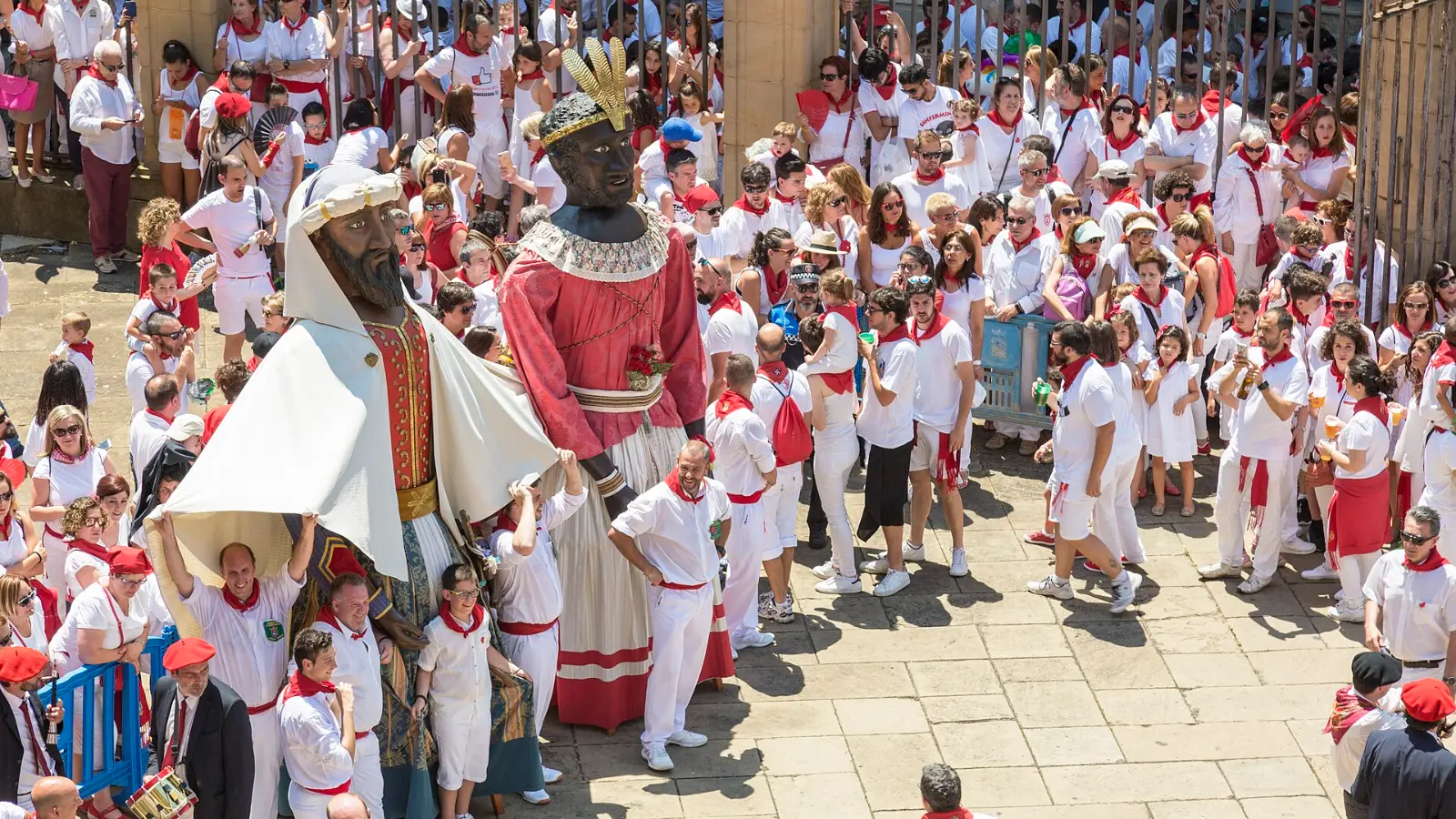
If the running of the bulls is the adrenaline of San Fermín, the Giants and Big-Heads parade is its gentle side: music, dancing and a tradition that Pamplona families pass down from parents to children. Every morning of the festival, the comparsa, the troupe of giant figures, winds through the Old Town followed by thousands of children. It is free, and if you travel with kids it is the best plan of the whole festival.
The parade at a glance
- When: every morning from July 7 to 14.
- Time: it sets off at 9:30.
- Starting point: the Palacio de Ezpeleta, on Calle Mayor, in the Old Town.
- Route: through the streets of the Old Town, different every day, returning to Calle Mayor.
- Break: around 11:00–11:30 the troupe rests, and there are activities for children such as water games, puppets, storytelling and magic.
- Price: free.
Who the giants are
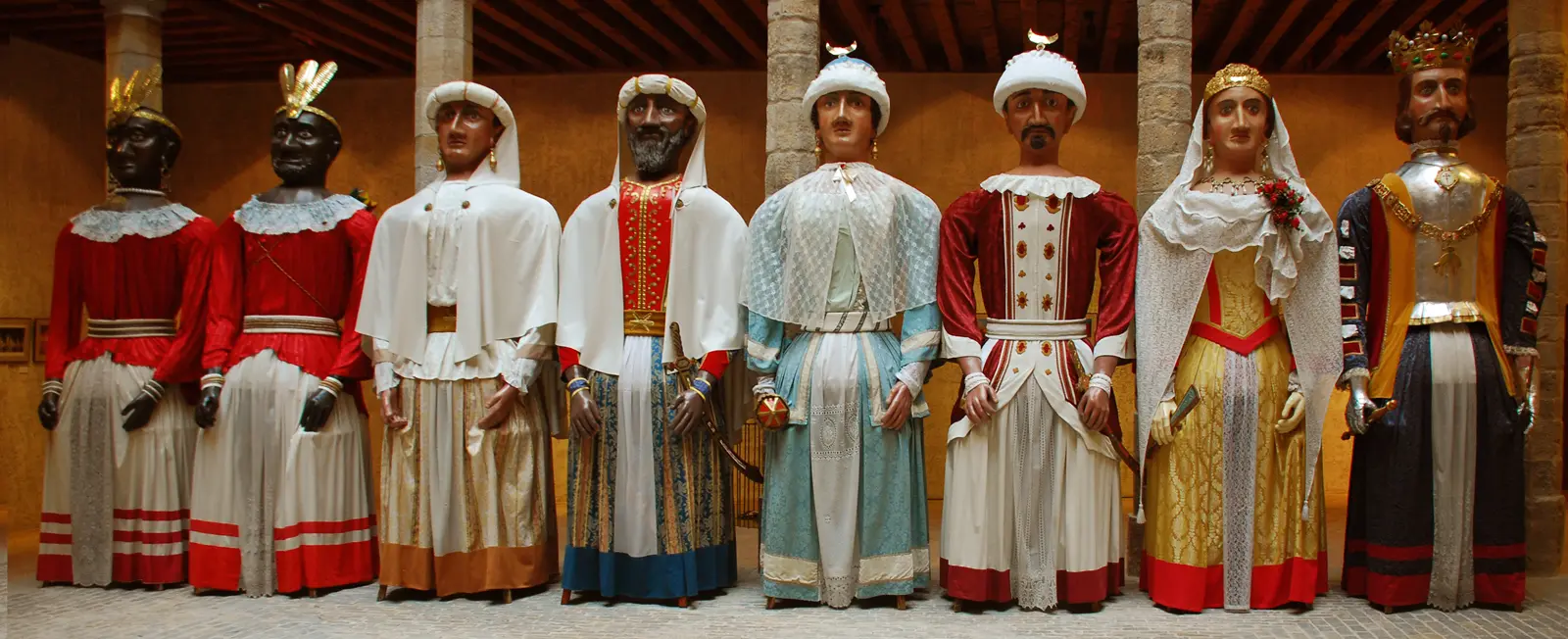
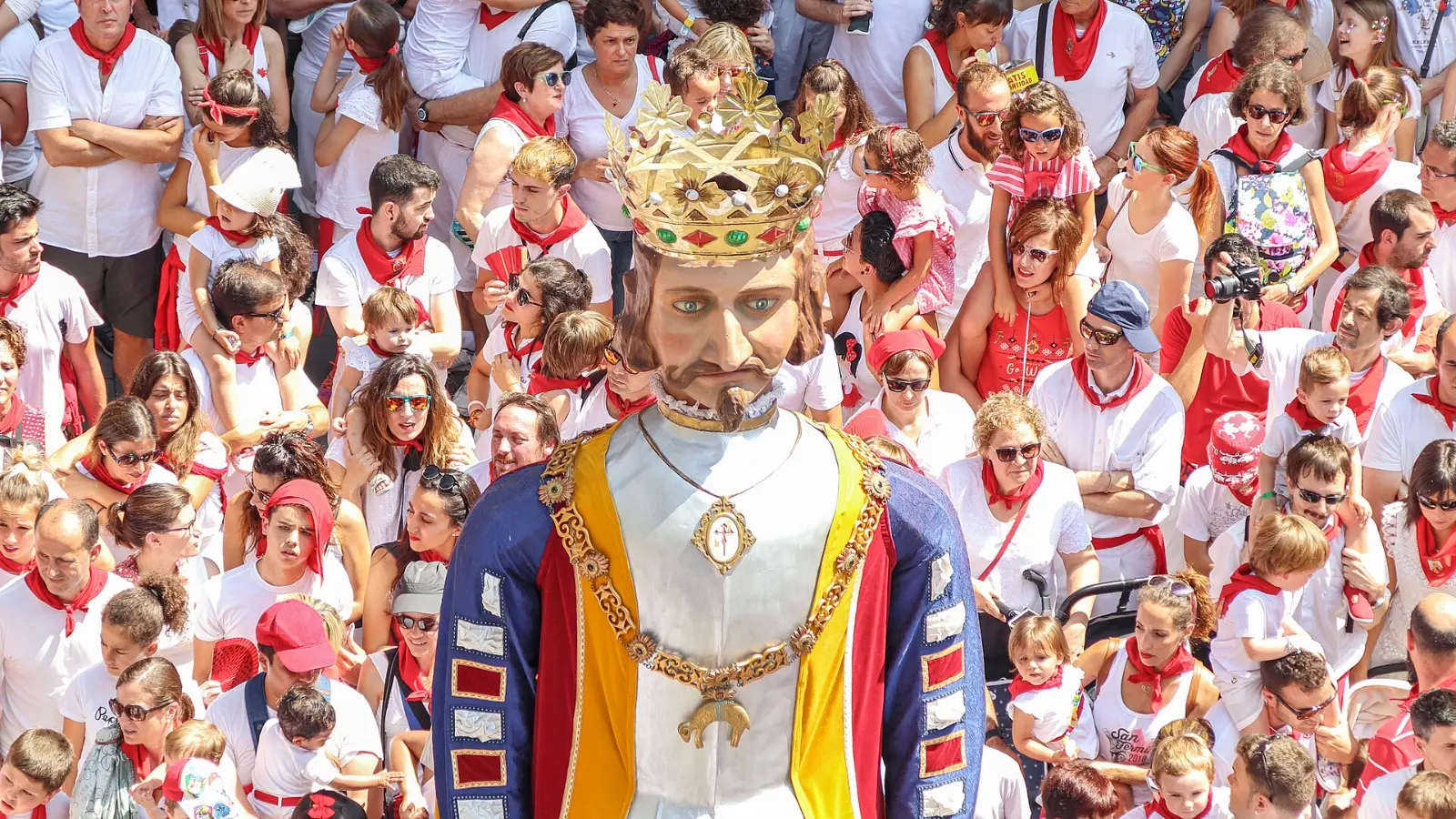
Pamplona has eight giants: four royal couples, a king and a queen for each of four parts of the world, Europe, Asia, Africa and America. The originals were built in 1860 by the artist Tadeo Amorena, commissioned by the city council.
Each giant is several metres tall and is carried by a single dancer hidden inside, who makes it spin and sway to the music of gaiteros (players of the Navarrese gaita, a reed pipe) and txistularis. When a giant spins in a narrow street, the whole crowd applauds.

The names of the giants
- Europe: Joshemiguelerico (king) and Joshepamunda (queen).
- Asia: Sidi Abd El Mohame (king) and Esther Arata (queen).
- Africa: Selim-Pia El Calzao (king) and Larancha-la (queen).
- America: Toko-Toko (king) and Braulia (queen).
Each giant is about 3.90 metres tall and weighs between 32 and 56 kilos.
Big-heads, kilikis and zaldikos
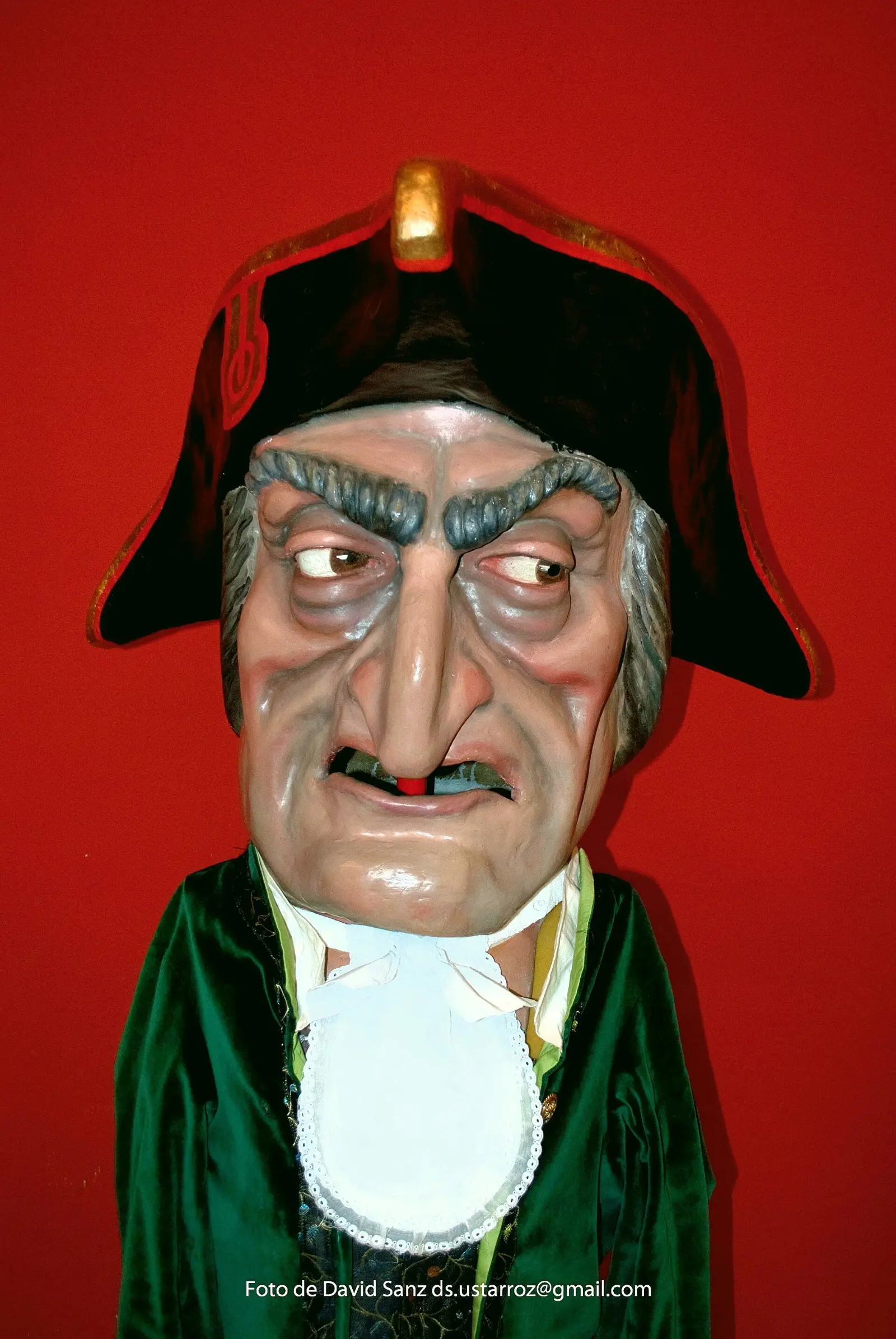
The full troupe has 25 figures. Besides the eight giants there are five cabezudos (big-heads), figures with huge heads that walk among the crowd; six kilikis, smaller big-heads that run after children and tap them with a soft foam stick; and six zaldikos, riders with a horse's body around their waist who join in the chase.
Every kiliki has its own name and personality, and children in Pamplona grow up with their favourite. Being chased by one is a rite of passage: half the kids run away screaming, the other half go looking for them.

The names of the kilikis and big-heads
Kilikis: Coletas, Barbas, Patata, Napoleón, Caravinagre and Berrugón. Big-heads: the Mayor, the Councillor, the Grandmother and the two Japanese figures. The zaldikos have no names: they are numbered from one to six. The big-heads were added in 1890, made by Félix Flores; the kilikis and zaldikos joined the troupe over the following decades.
Where to see them
The Old Town streets are narrow, so the best views are in squares and wider streets along the day's route. To see the troupe set off, be on Calle Mayor, near the Palacio de Ezpeleta, a little before 9:30. The route changes every day: check it in the official programme, or use the city's San Fermín app, which shows where the troupe is in real time.
Tips for going with children
- Arrive a few minutes early and stand where your child can see without being crushed.
- If they are scared of the kilikis, watch from a step back; if they love them, stand at the front.
- Bring water and a cap: by mid-morning the sun is strong.
- Agree on a meeting point and write your phone number on a wristband or inside their clothes.
- Dress them in white and red: see what to wear to San Fermín.
More family plans in San Fermín with kids.
Special days
July 7. The troupe joins the Procession of San Fermín, one of the most beautiful moments to see the giants dance.
July 14. The last outing ends with an emotional farewell in Plaza del Castillo, after which the figures are put away until the next festival. Many Pamplona families come just for this goodbye.

Fit the parade into your plans with our San Fermín itinerary for 1 to 4 days: it goes perfectly after watching the bull run and before a pintxo lunch.
Frequently asked questions
What are the names of the Pamplona giants?
Joshemiguelerico and Joshepamunda (Europe), Sidi Abd El Mohame and Esther Arata (Asia), Selim-Pia El Calzao and Larancha-la (Africa), and Toko-Toko and Braulia (America).
What time do the giants come out at San Fermín?
Every morning from July 7 to 14 at 9:30, from the Palacio de Ezpeleta on Calle Mayor, in Pamplona's Old Town.
How many giants are there in Pamplona?
Eight giants, four royal couples representing Europe, Asia, Africa and America. The troupe has 25 figures in all: the eight giants, five big-heads, six kilikis and six zaldikos.
Is the Giants and Big-Heads parade suitable for children?
Yes, it is the most family-friendly event of San Fermín. The kilikis and zaldikos chase children and tap them with soft foam, which most kids love. If yours is scared, watch from a little further back.
How old are the Pamplona giants?
The original eight giants were made in 1860 by the artist Tadeo Amorena, commissioned by the city council.
Where can I see the route of the giants each day?
The route changes every day and is published in the official programme. The city's San Fermín app shows where the troupe is in real time.
In pictures
Giants and big-heads of Pamplona, in pictures: 21 photos, plus all our San Fermín pictures.